


The digital trend! Are you ready?

February 08, 2023
Return To List

August 17th, a notice was published, Among them, to create a number of “small, fast, light and accurate” digital system solutions and to create 4,000-6,000 “small lighthouse” enterprises as digital transformation benchmark enterprises, is the notice pointed out in the manufacturing industry important guidance direction. Among them, the textile, clothing and leather products processing for the transformation of one of the pilot sub-sectors.
newdetail
The future of manufacturing: small, fast, light and accurate.

The development of the manufacturing industry is the cornerstone of the development of the real economy. The development of the manufacturing industry in terms of miniaturisation, speed, lightness and precision is the top priority of the development of the digital economy, and the deep integration of the digital economy with the real economy is a favourable choice for achieving high-quality development. However, the traditional manufacturing model has brought many challenges to the digital development of the manufacturing industry, taking the processing of textile, garment and leather industries as an example: high labour costs, time-consuming processes and high energy consumption are among the many problems that arise.

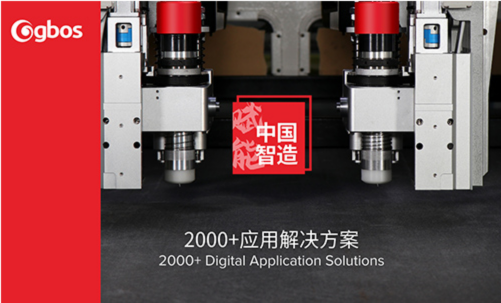
In order to actively respond to the national policy, as well as to effectively solve the traditional manufacturing industry pain points, GBOS has been committed to the research and development of intelligent cutting equipment and technological innovation, through the development of laser machines, oscillating knife digital cutter, other automated equipment and IoT Bridge as the core. By developing laser machines, oscillating knife digital cutter, other automation equipment and IoT Bridge as the core, and equipped with intelligent VisionScan, projection preview positioning and 30+ optional module systems, to create a one-stop intelligent cutting equipment & innovative process solutions driven by digital core technology, empowering digital intelligent manufacturing!

newdetail_2
Two technologies to empower digital smart manufacturing in the textile, apparel and leather industries

In the textile, clothing and leather industries, the VC9-1612-P and the IoT Bridge have been developed to empower digital smart manufacturing. The VC9-1612-P is a vibratory knife cutting machine for small orders that combines cutting, auto line marking and punching all in one, created to reduce process flow and respond quickly to small and diverse orders.

Recommended news
  • As the FIFA World Cup 2026 in the USA, Canada, and Mexico draws closer, football fever is sweeping across the globe. More than just a sporting event, the World Cup has become a worldwide celebration that unites fans across cultures, generations, and borders. On the pitch, players fight passionately for glory. Off the pitch, fans gather in homes, fan zones, and local fields to share the excitement together. Football is no longer simply a game—it is a symbol of passion, identity, and connection. Among all the elements that define football culture, the team jersey stands out as one of the most iconic. It represents loyalty, pride, and the spirit of competition. For both players and supporters, a jersey is far more than sportswear—it is a badge of belief. 01 Rising Demand Brings New Challenges to Jersey Manufacturing With the arrival of the World Cup, demand for football jerseys is rapidly increasing. From classic stripes and retro plaids to vibrant digital prints and customized club designs, today’s consumers expect jerseys that combine striking aesthetics with premium quality. In jersey manufacturing, pattern alignment and print accuracy have become critical indicators of craftsmanship. Whether it is the continuity of shoulder stripes, the symmetry...
    Pub Date: May 26, 2026
  • As consumer expectations for detail and craftsmanship continue to rise across apparel, footwear, and fashion accessories, labels and trims have evolved far beyond simple brand identifiers. Exquisitely woven labels, multi-layered tags, and intricately printed ribbons now serve as tangible expressions of a brand’s identity, quality, and design sophistication. Driven by this shift, market demand for labels and trims is becoming increasingly diversified, customized, and quality-oriented. Order volumes continue to grow, creating significant opportunities for processors. Yet many manufacturers are still caught in a difficult dilemma: increasing production capacity often comes at the expense of quality, while maintaining precision can limit throughput. As the industry advances, legacy production methods and equipment limitations are becoming major obstacles to growth. 01 Industry Challenges: The Bottlenecks Behind Quality and Efficiency Today’s label and trim manufacturers face several persistent challenges that directly impact profitability, scalability, and competitiveness. Poor Adaptability to Complex Processing Requirements Conventional cutting equipment often struggles to handle increasingly sophisticated trim designs. Frayed woven-label edges, damage to printed graphics, and deformation of irregular contours are common issues that compromise product appearance and lead to costly rework. These defects ultimately affect delivery schedules, product consistency, and brand reputation. Same-Color Material Positioning Remains a Technical...
    Pub Date: Jun 18, 2026
Book an virtual demonstration with us to learn more about digital cutting and process solutions.
Request A Web/On Site Demo
Get Manufacturing and Process Solutions
Conatct now
Customization
Customized products
Find which machiney suits you best
Please select below options, it will help you find what you are looking for more quickly.
Choose your application(s) from the list.
NEXT STEP
Applied in roll or sheet materials?
PRE STEP
NEXT STEP
What is the max length and width of your material?
Length
Width
PRE STEP
NEXT STEP
Here are standard models for you:
PRE STEP