


Laser Washing of The Denim: An Environment-friendly Customized Method for Real

December 31, 2015
Return To List

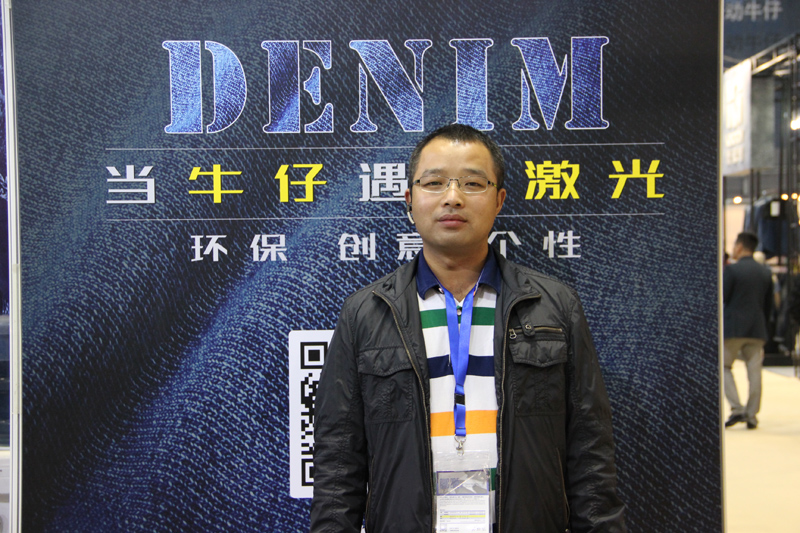
2015 autumn CHIC, GBOS Laser introduced Green Pioneer 2D intelligent denim  washing system. Just like the Green Pioneer 3D, they are the advanced devices used to substitute the traditional washing technological methods. There is more than 95% of similarity between them and the manual water washing. According to Mr. Liu Wu, the deputy general manager of GBOS Laser, the GBOS Laser devices are very popular in Bangladesh, Turkey, and Iran; however, the situation is not so optimistic in domestic market. He further maintained that there are two reasons behind the situation according to the market survey. On one hand, the cost to introduce laser washing devices are huge, and on the other hand, the environment protection awareness is not sufficient.
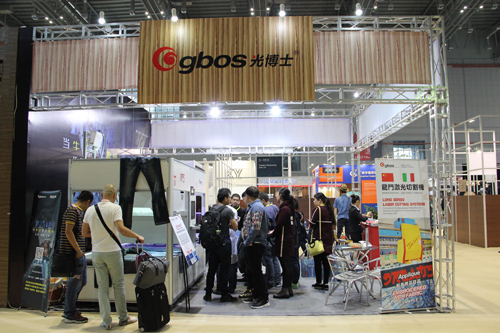
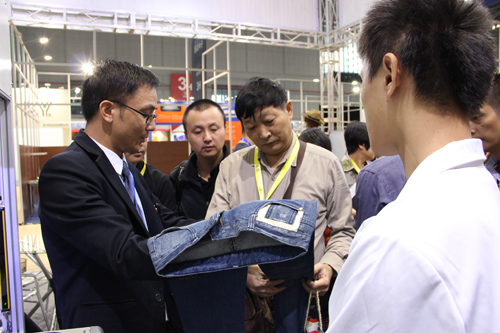
 

Through a few demonstrations in the exhibition, the journalists found that people in the industry shows an increasingly strong interest in the laser washing devices. In this exhibition, GBOS Laser attracts streams of visitors through its glossy brand that claimed to be “intelligent, fashionable, environmental-friendly and customized”.

Mr. Liu said that currently the customized service is hot. They could create personalized marks, names, or design patterns and monkey washings according to different requirements of the customers.

Talking about the prospective of the laser devices, Mr. Liu is quite optimistic. He said adopting environment-friendly technology is the prevalent trend. The advantages of the laser washing are obvious. It is imperative for the domestic denim  market to recognize it and implement it in their production. Our national policy and practice on environment protection is strengthened, so that the outdated denim  washing techniques would be eliminated. As our Chinese enhances the environment protection awareness, the promotion of laser washing will be easy. As to the development planning of the GBOS in the future, Mr. Liu believed that the positioning is essential, and that the GBOS Laser will actively expand the overseas market and integrate the global resources. 

We believe the laser washing that takes environment protection as the starting point, the quality as the base, the innovation as the highlights, and cost efficiency as the goal will have a bright future.

In the same time period, GBOS Laser held wonderful lectures themed the bright future of the laser washing of denim  in the denim  world forum, which has drawn quite a number of visitors in the industry.
Recommended news
  • The lingerie industry is undergoing a major transformation. The market for sports bras and seamless bras continues to grow, while orders are becoming more fragmented and delivery cycles are getting shorter. Small-batch, multi-style production is gradually becoming the norm. At the same time, consumers are demanding greater comfort, better shaping performance, and more functional designs. This is pushing manufacturers to work with increasingly diverse and complex fabric combinations. For lingerie factories, production therefore needs to become more flexible than ever—while cost control, cutting accuracy, and quality consistency must remain stable. 01 Two Common Fabrics, One Critical Cutting Challenge Lycra® and cotton are among the most widely used materials in lingerie manufacturing, but both can present significant challenges during cutting. Lycra® is highly elastic. When multiple layers are stacked, the fabric can stretch and shift between layers. Even small dimensional deviations in the cut pieces can affect subsequent sewing and, in severe cases, result in an entire batch being rejected. Cotton presents a different challenge. Its soft texture can make cutting more difficult when the blade is not sharp or stable enough. Frayed edges, material adhesion, and inconsistent cutting results may then lead to additional manual rework. These challenges become even...
    Pub Date: Sep 10, 2026
  • The footwear industry is undergoing a structural transformation. The era of relying on demographic dividends and large-scale manual labor is coming to an end. The industry’s growth model is shifting—from competing on production capacity and scale to competing on flexibility, material utilization, and consistent quality. Consumer demand is evolving faster than ever. Orders are trending toward smaller batches and a wider variety of SKUs, placing greater demands on factories’ ability to respond quickly. 01 A Crossroads for Footwear Industry Transformation Opportunities exist—but significant real-world challenges remain. Leather processing presents particularly acute challenges: skilled workers are increasingly scarce, manual cutting relies heavily on experience, and natural leather defects are unavoidable. At the same time, the entire workflow—from nesting and material handling to cutting and marking—remains highly dependent on manual operations. This can easily lead to material waste, inconsistent batch quality, and high defect rates caused by repeated manual repositioning. On one side is growing market demand for premium leather footwear; on the other are rising labor costs and persistently high material waste. Many factories find themselves caught in a dilemma: eager to upgrade, yet lacking practical and deployable tools. The way forward does not lie in simply increasing manpower, but in...
    Pub Date: Sep 07, 2026
Book a virtual demo to explore our digital cutting and process solutions.
Request an Online or On-Site Demo
Get Your Manufacturing & Process Solution
Contact Now
Customization
Customized products
Find the machine that suits you best
Select from the options below to find what you need faster.
Choose your application(s) from the list.
NEXT STEP
Do you process roll or sheet materials?
PRE STEP
NEXT STEP
What is the max length and width of your material?
Length
Width
PRE STEP
NEXT STEP
Here are the standard models for you:
PRE STEP