


The footwear industry is undergoing a structural transformation.

The era of relying on demographic dividends and large-scale manual labor is coming to an end. The industry’s growth model is shifting—from competing on production capacity and scale to competing on flexibility, material utilization, and consistent quality.
Consumer demand is evolving faster than ever. Orders are trending toward smaller batches and a wider variety of SKUs, placing greater demands on factories’ ability to respond quickly.
01 A Crossroads for Footwear Industry Transformation
Opportunities exist—but significant real-world challenges remain.
Leather processing presents particularly acute challenges: skilled workers are increasingly scarce, manual cutting relies heavily on experience, and natural leather defects are unavoidable. At the same time, the entire workflow—from nesting and material handling to cutting and marking—remains highly dependent on manual operations. This can easily lead to material waste, inconsistent batch quality, and high defect rates caused by repeated manual repositioning.

On one side is growing market demand for premium leather footwear; on the other are rising labor costs and persistently high material waste. Many factories find themselves caught in a dilemma: eager to upgrade, yet lacking practical and deployable tools.
The way forward does not lie in simply increasing manpower, but in using equipment and algorithms to transform tacit expertise into standardized and repeatable production capabilities.
02 Leather Intelligent Cutting Production Line: Handing the Challenges Over to Machines
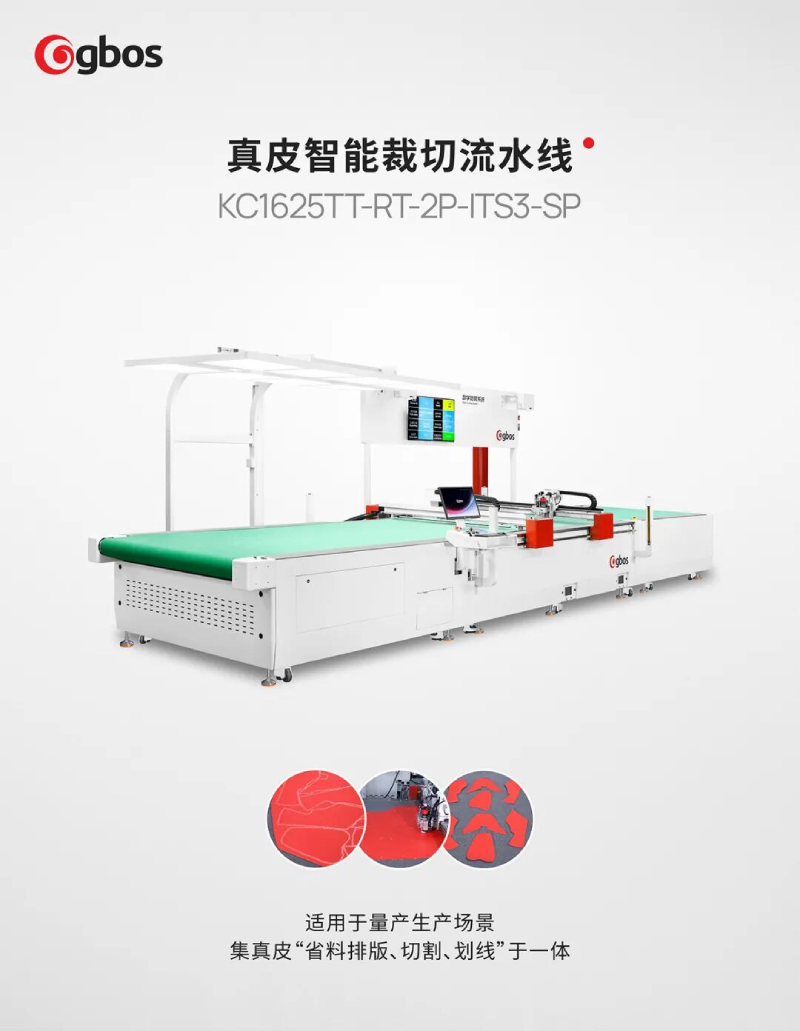
The KC1625TT-RT-2P-ITS3-SP Leather Intelligent Cutting Production Line, optionally equipped with an automatic material handling system, is designed to address the key bottlenecks across the leather production process.
It integrates nesting, marking, cutting, and material handling into a single automated workflow, redefining the production process for leather cutting.
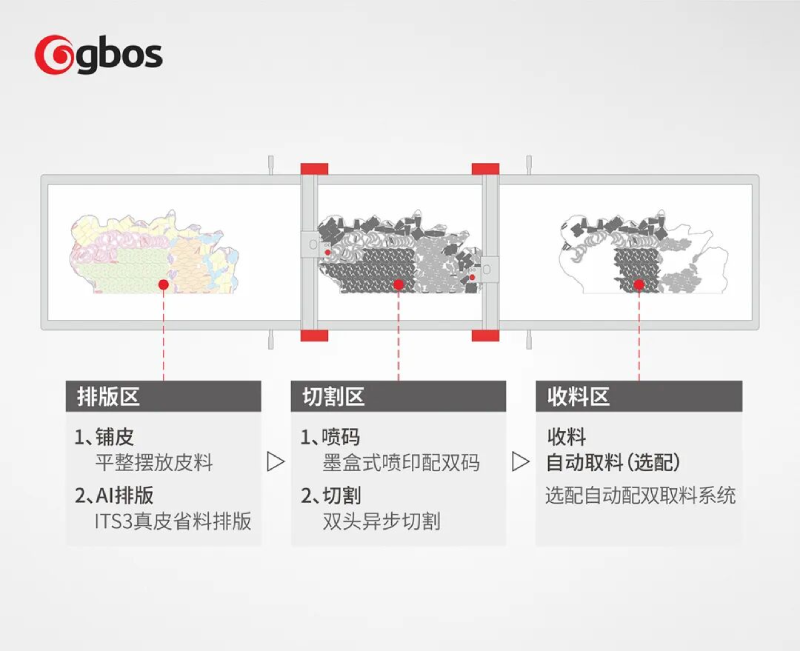
Powered by the ITS3 Leather Nesting System and embedded with deep-learning AI models, the system automatically identifies leather defects. Its algorithms continuously iterate and optimize, improving material utilization with each use.
Dual-head asynchronous cutting, combined with an integrated waste extraction structure, enables simultaneous dual-tool operation and achieves over 90% waste removal efficiency, balancing cutting speed with workshop cleanliness.
Cartridge-based inkjet marking enables sequential identification before cutting, with a wide range of ink options and clear, non-overlapping printing to ensure full traceability for downstream processes.
With the optional Dual-VisionScan Automatic Leather Handling System, the entire solution further reduces reliance on highly experienced operators.
No more repeated manual alignment means fewer re-cuts, less scrap, lower labor input, and significantly reduced waste of expensive leather materials.
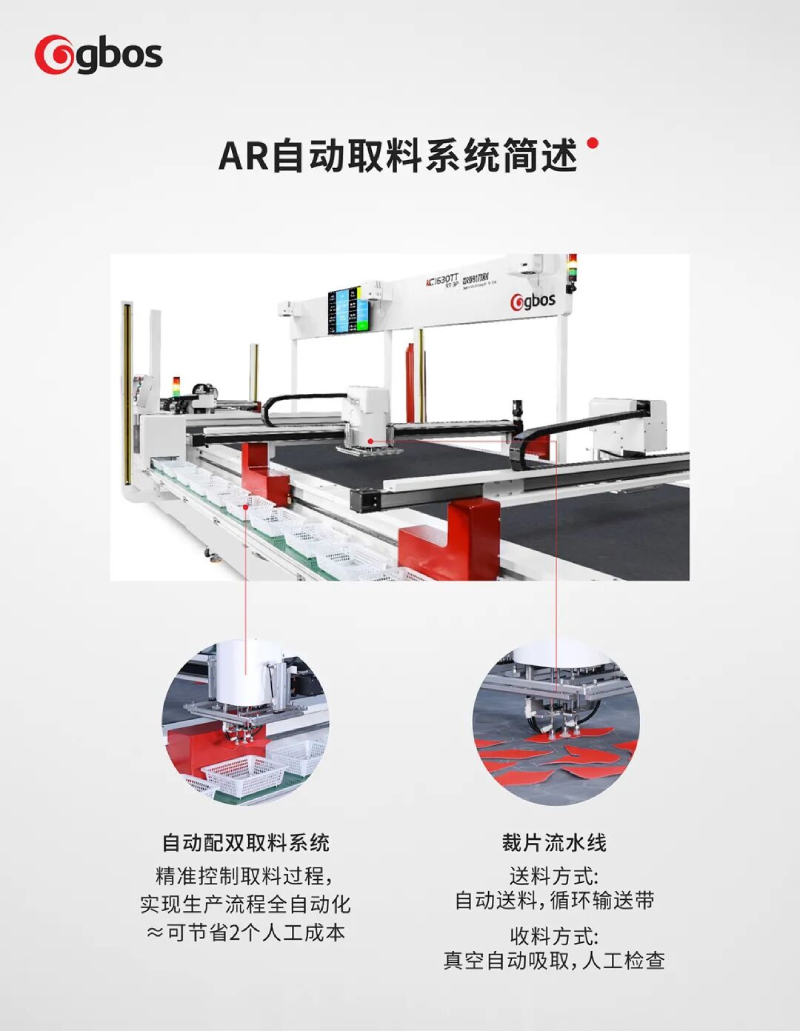
Under mass-production conditions, product consistency can be maintained, allowing factories to avoid compromising between efficiency and yield.
For manufacturers, this is far more than simply replacing a single machine. It transforms the intuitive cutting expertise once held only by master craftsmen into a standardized, scalable, and deployable intelligent manufacturing process.
03 Technology Is Not a Gimmick—It’s the Enterprise’s Long-Term Foundation
Many people view automation equipment simply as a tool for reducing costs. However, its true value extends far beyond saving labor and materials.
Only when cutting, nesting, and marking become fully digitized can factories build the foundational capabilities needed to take on more complex, higher-value orders and respond with greater confidence to order fluctuations and delivery pressures.
Industrial upgrading is never achieved through a single grand transformation. Instead, it unfolds through countless incremental improvements on the shop floor.

What truly differentiates enterprises is not simply whether they can win orders, but whether they can deliver those orders consistently, efficiently, and at low cost.
The Leather Intelligent Cutting Production Line addresses real and tangible pain points faced by footwear factories.
Ultimately, the implementation of technology serves one core purpose: empowering manufacturers to survive—and thrive—through economic cycles.
Intelligence is no longer optional. It is becoming an increasingly clear and non-negotiable imperative on the industry’s path toward high-quality development.
 Address: No. 1 Liansheng Road, Hongmei Town, Dongguan City, Guangdong Province. CN
  Tel: +86 769 88990609
  Fax: +86 769 88990677
  Email: