


Leather processing companies want to grow, but their growth is constrained by more than order volume. The real challenge lies in balancing factory space, equipment, and labor productivity.
Many manufacturers find themselves caught in a dilemma: market opportunities are there, but their existing equipment and floor-space layout limit their production capacity.
01 Why Capacity Expansion Has Become Increasingly Difficult
Factory rents continue to rise, making every square meter of usable floor space increasingly valuable. Meanwhile, orders are becoming more fragmented, and processing leather alongside various auxiliary materials has become increasingly common.
Expanding capacity often means renting a larger factory and taking on higher fixed costs. Without expansion, however, existing equipment may reach its capacity limit and struggle to handle additional orders.

Processing multiple material categories often requires multiple machines, each occupying valuable floor space and adding to operating costs.
Space constraints eat into profits, while scattered equipment limits production capacity. This is a major challenge for manufacturers pursuing smart manufacturing.
02 How One Machine Can Deliver More Than Twice the Capacity
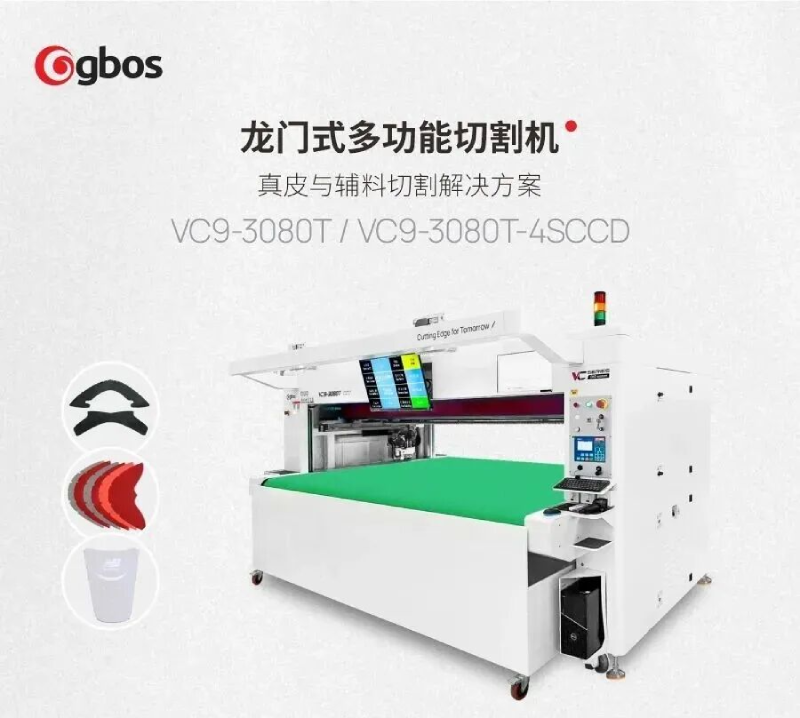
The GBOS VC9-3080T Gantry-Type Multifunctional Digital Cutting Machine challenges the traditional approach of assigning one machine to one task. By integrating multiple cutting functions into a single system, it can deliver more than twice the capacity within the same floor space.
This is more than simply combining two machines. It is a gantry-type, multi-head cutting system designed to address the challenges of mixed-material production.
1. Multiple Materials, One Machine
The machine is suitable for cutting full-grain and split cowhide leather and can also process various auxiliary materials. Patterned-material cutting with the AI VisionScan system, heat-press knife changes, and other operations can all be performed on the same machine.
It provides a one-stop cutting solution for multiple industries, including footwear, bags, automotive interiors, furniture, and sofas.
Previously, materials had to be moved between machines, creating interruptions between processes. Now, multiple operations can be completed on the same machine, reducing material handling and shortening the production process.
2. Multi-Head Asynchronous Cutting: Capacity That Adapts to Orders
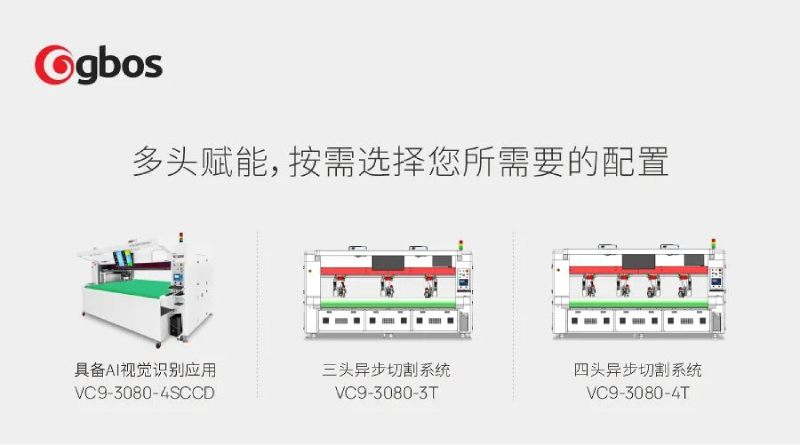
The system supports optional three-head and four-head asynchronous cutting configurations. Each head operates independently while working in coordination with the others, allowing production capacity to be allocated flexibly according to order volume and product type.
There is no need to invest in the full configuration from the outset. The system can be upgraded as the business grows, enabling flexible capacity expansion while minimizing the risk of underutilized equipment.
3. Four-Projection Positioning: Reducing Material Waste
The four-projection preview and positioning system supports multi-panel preview, positioning, cutting, and material collection. The entire process, from loading to unloading, is visualized, allowing operators to see the cutting layout and monitor material collection more clearly.
This helps reduce errors caused by manual positioning and further minimizes waste of high-value materials such as leather. For manufacturers, better material utilization translates directly into cost savings.
03 Limited Space, Greater Growth Potential
Competition in manufacturing ultimately comes down to how efficiently resources are used.
Factory space is limited, labor costs are rising, and order structures are becoming increasingly diverse. A good cutting machine does more than process materials; it can also help reshape production workflows.
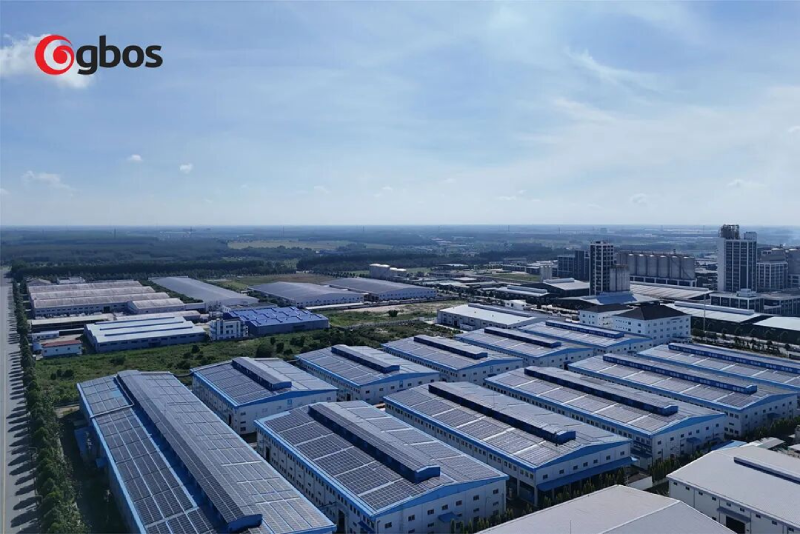
Upgrading manufacturing operations does not always mean acquiring more land or building new factories. Optimizing existing floor space, replacing multiple scattered machines with one highly efficient system, and making better use of every square meter can provide a more sustainable path to growth.
 Address: No. 1 Liansheng Road, Hongmei Town, Dongguan City, Guangdong Province. CN
 Tel: +86 769 88990609
 Fax: +86 769 88990677
 Email: