


As of February 10, Ne Zha: The Devil Child Rages at the Sea (hereinafter referred to as Ne Zha 2) has surpassed 8 billion yuan at the box office, claiming the top spot in China’s film history. Alongside its box office success, co-branded merchandise is selling out at an astonishing rate—numerous companies have launched collaborative products, crowdfunding for various original merchandise has exceeded tens of millions, co-branded T-shirts and blind boxes are selling out instantly, and resale prices have doubled. In short, Ne Zha-themed products are in overwhelming demand. Behind this Ne Zha craze lies the immense potential of the IP product economy.
Today, the influence of IP has long transcended film, literature, and other creative works, extending into various consumer sectors. Products built around popular IPs—ranging from toys and stationery to apparel and footwear—often achieve remarkable market success, driven by fans’ passion and deep connection to the IP.
According to relevant data, the global IP licensing market continues to expand, with growing consumer demand for IP-based products. This undoubtedly presents vast market opportunities for the development of the IP product economy.
For peripheral product manufacturers, this is both an opportunity and a challenge. The key focus is how to efficiently produce market-driven products amid this surging IP trend.
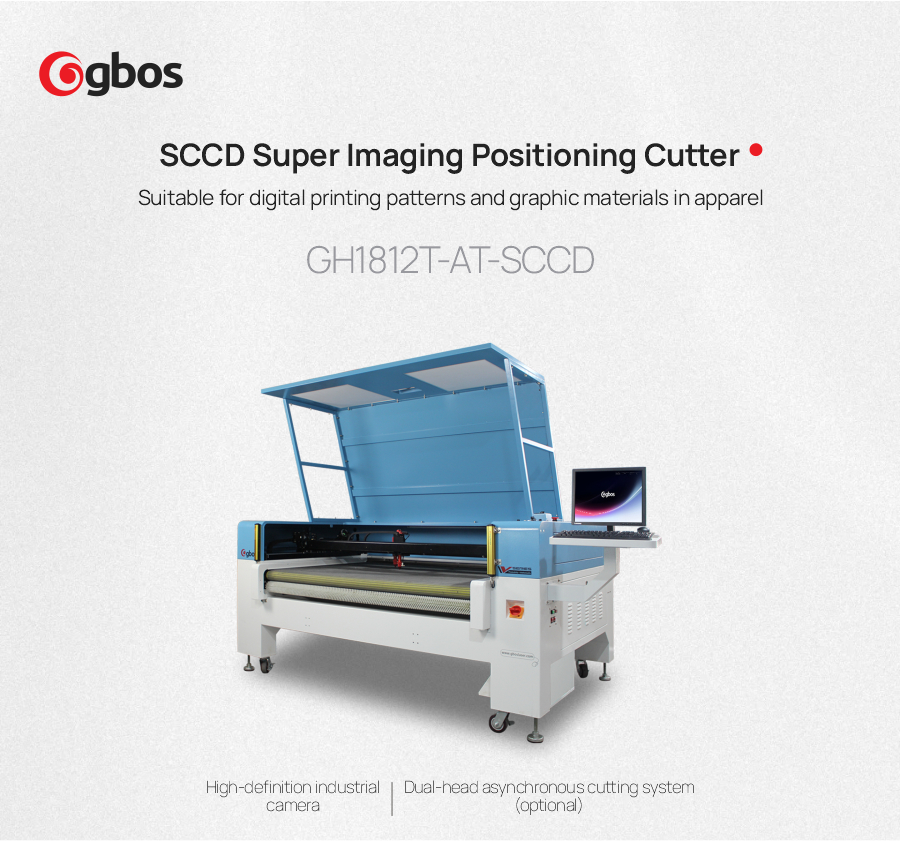
In the field of IP product apparel production, GBOS’s SCCD Super Camera Positioning Laser Cutter GH1812T-AT-SCCD is specifically designed for positioning and cutting digitally printed and patterned fabrics.
This machine features rapid, large-area intelligent visual recognition and contour extraction capabilities. It can precisely identify and extract pattern outlines from large fabric pieces in a short time. Whether it’s intricate anime characters or delicate artistic patterns, it ensures perfect presentation.
By utilizing vision-based alignment technology, each cut strictly adheres to preset standards, achieving uniform and precise cutting. This effectively prevents cutting deviations, ensuring that the fabric has no yellowing, burning, or blackened edges after cutting, significantly enhancing product quality and yield.
In mass clothing production, the automatic feeding system reduces reliance on manual material handling, enabling fully automated operation and further enhancing production efficiency and standardization.
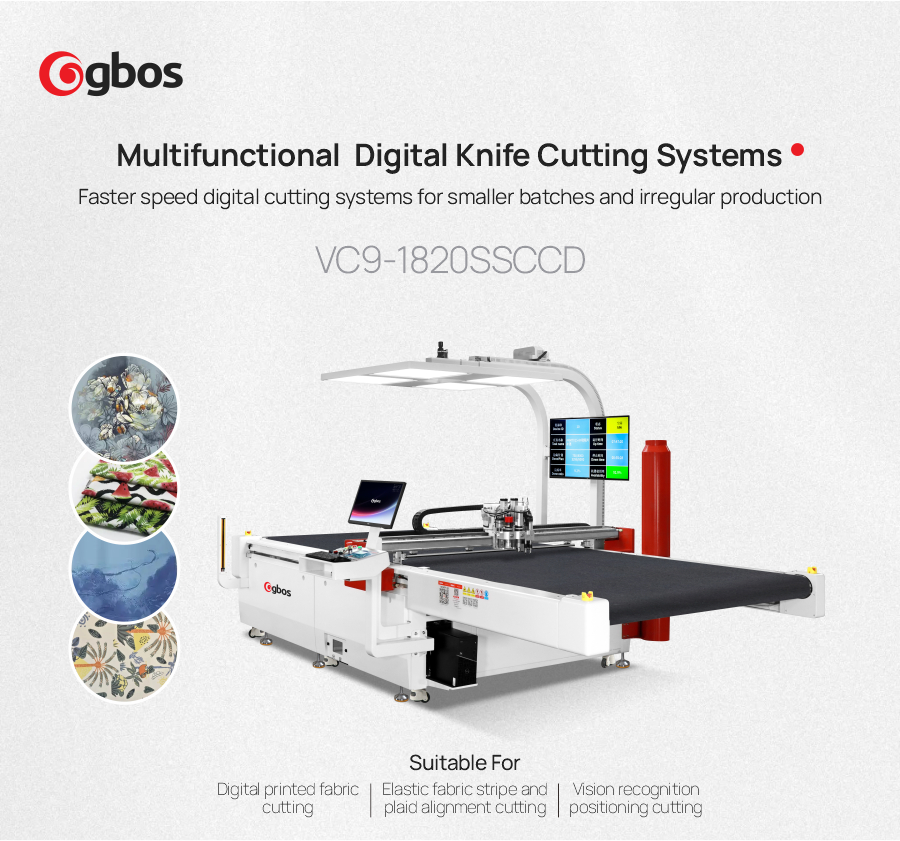
To better meet the market demand for fast, small-batch, and irregular production, we proudly introduce the VC9-1820SSCCD Multifunctional Digital Knife Cutting System.
This machine is equipped with an advanced AI VisionScan system, capable of accurately identifying various complex fabric patterns and textures. It has undergone a comprehensive upgrade and optimization in its core functions and configurations.
The system not only supports the recognition and cutting of “digital print” IP graphics but also enables the identification and precise cutting of various woven and jacquard materials. Additionally, the machine’s V-punch and round punch functions can improve V-shaped notch and various hole punching requirements, adding more flexibility and versatility to support diverse cutting operations.
When faced with unique and limited-quantity IP garment orders, it can flexibly respond and quickly transform design inspiration into actual products. This helps manufacturers seize more market opportunities, enhance customer satisfaction, and foster customer loyalty through rapid responses to client demands.
In addition to providing technical support for IP product garment production, GBOS also offers a variety of excellent machine products and innovative process solutions in industries such as footwear, toys, and acrylic products (commonly referred to as “Guzi”).
If you have any needs during the production of these IP products, feel free to contact us at any time. GBOS will support you in seizing the opportunity in the IP product economy with advanced technology, high-quality products, and attentive service, helping you achieve greater commercial value.
 Address: No. 1 Liansheng Road, Hongmei Town, Dongguan City, Guangdong Province. CN
  Tel: +86 769 88990609
  Fax: +86 769 88990677
  Email: