


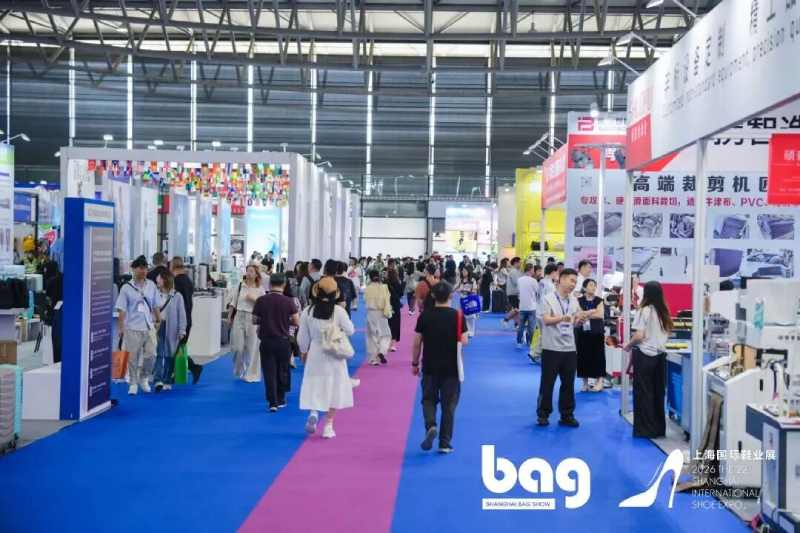
From June 26–28, GBOS successfully showcased its latest intelligent cutting solutions at the 22nd Shanghai International Luggage Exhibition held at the Shanghai New International Expo Center.
As one of China’s most influential trade events for the luggage and leather goods supply chain, this year’s exhibition highlighted a question every manufacturer is facing:
With rising material costs, increasingly fragmented orders, and growing labor expenses, how can bag manufacturers maintain profitability while staying competitive?
At the exhibition, GBOS answered this question with practical, intelligent manufacturing solutions that attracted strong interest from industry professionals.
01 Four Critical Challenges Every Bag Manufacturer Is Facing
Behind shrinking profit margins lies a widening gap between traditional production methods and today’s fast-changing market demands. Throughout the exhibition, visitors repeatedly shared four common pain points.
1. Slow Product Development Delays Market Opportunities
Traditional die-cutting requires mold manufacturing, repeated adjustments, and long-term mold storage before production can begin. This process often takes several days.
As fashion trends evolve faster and customers increasingly demand small-batch, customized products, both the time and cost of producing molds have become significant burdens, causing manufacturers to miss valuable market opportunities.
2. Leather Waste Continues to Reduce Profit Margins
Premium genuine leather becomes more expensive every year, making material utilization more critical than ever.
Manual nesting depends heavily on operator experience and cannot accurately avoid natural defects, scars, or irregular hide shapes. As a result, large amounts of premium leather become waste, significantly reducing the profitability of every order.
3. Heavy Dependence on Skilled Labor Limits Production Stability
Processes such as cutting, positioning, and edge trimming all rely on experienced operators.
However, skilled labor is becoming increasingly difficult and expensive to recruit. Manual operations inevitably create dimensional inconsistencies, leading to higher defect rates, more rework, additional material waste, and reduced production efficiency.
4. Conventional Processes Struggle with New Sustainable Materials
As eco-friendly materials such as recycled leather, composite waterproof fabrics, and EVA continue gaining popularity, many traditional production lines struggle to process them efficiently.
Disconnected workflows between design, cutting, and finishing further reduce manufacturing flexibility, making digital transformation increasingly necessary.
These challenges cannot be solved by upgrading individual machines alone. What manufacturers need is a complete digital transformation of the cutting process—the foundation of bag production.
This was exactly the value GBOS demonstrated throughout the exhibition.

02 Live Demonstrations Showed the Real Value of Intelligent Manufacturing
Rather than simply displaying equipment, GBOS recreated real production scenarios through complete live demonstrations, allowing visitors to experience firsthand the difference between traditional manufacturing and digital intelligent production.
From handbags and leather bags to various other bag applications, the entire cutting workflow was demonstrated on-site using AI-powered intelligent cutting technology.
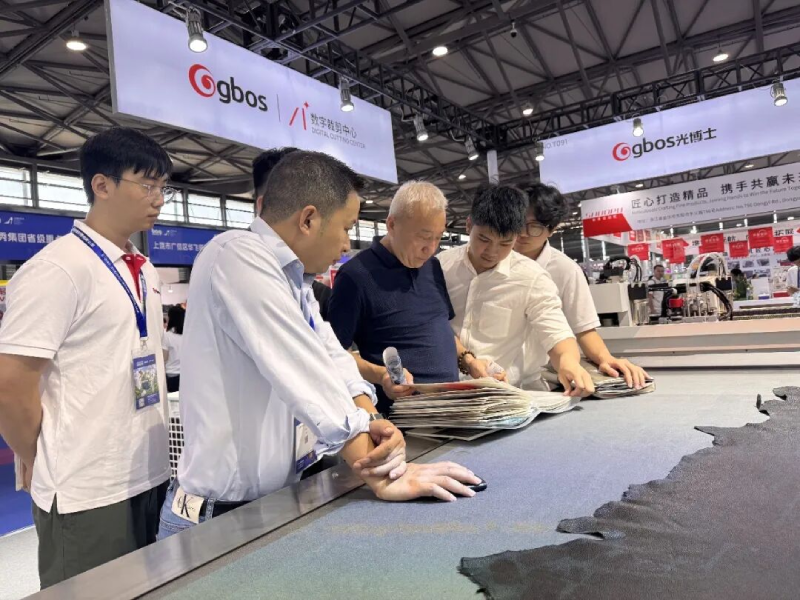
AI Vision Makes Every Piece of Leather Count
The AI VisionScan system automatically scanned leather surfaces, accurately identified natural defects such as scars and blemishes, and intelligently optimized nesting layouts.
Compared with manual nesting, manufacturers could immediately see how AI significantly improves leather utilization while reducing material waste.
Precision Cutting Improves Quality and Reduces Rework
For complex manufacturing requirements—including pattern matching, stripe and grain alignment, irregular-shape cutting, and zipper opening preparation—the equipment completed every process automatically with outstanding precision.
Consistently accurate cutting greatly reduced alignment errors and quality defects caused by manual operations, lowering both rework costs and material consumption.
Rapid Sample Production Without Physical Dies
With GBOS’s digital workflow, manufacturers no longer need to produce or store cutting dies.
Simply import a new design, and the system is ready for sampling or mass production immediately.
This flexibility perfectly supports today’s manufacturing environment, where small production runs, diversified product styles, and faster product launches have become the norm.
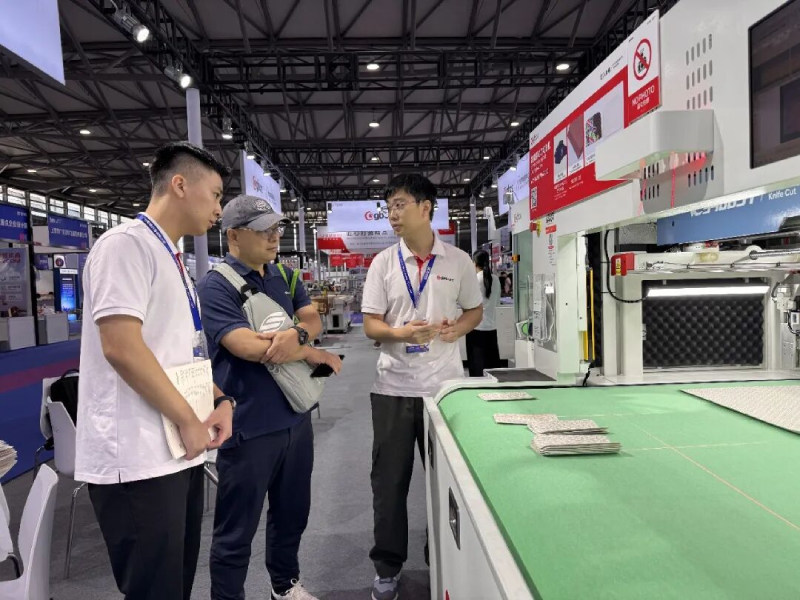
Compatible with a Wide Range of Materials
Live demonstrations covered various commonly used materials, including genuine leather, PU, recycled leather, EVA, and other sustainable materials.
Visitors from different manufacturing sectors could directly evaluate how GBOS solutions would fit their own production requirements and future development plans.

From Equipment Supplier to Digital Transformation Partner
More importantly, GBOS presented not just individual machines, but a complete digital manufacturing solution.
Throughout the exhibition, technical specialists worked one-on-one with visitors, analyzing each factory’s product mix, material characteristics, and production workflow to calculate potential savings in materials, labor, and production time.
Instead of discussing digital transformation as a concept, GBOS demonstrated measurable improvements that manufacturers could realistically achieve.
Guided by its philosophy of “Solution First, Implementation First,” GBOS remains committed to delivering customized digital manufacturing solutions rather than simply supplying equipment.
03 Digital Transformation Is No Longer Optional—It’s the Future of Bag Manufacturing
This year’s Shanghai International Luggage Exhibition delivered a clear message to the industry:
The era of relying on inexpensive labor and high material consumption to generate profits is over.
As raw material prices continue to rise, consumer demand becomes increasingly diversified, and labor costs keep increasing, traditional die-cutting and manual production methods are becoming less sustainable.

Whether for leading domestic manufacturers or global production facilities, intelligent cutting has rapidly become a shared direction for future development.
Digital transformation is not simply about automation or reducing labor—it is about rebuilding the entire production process.
Lower material waste, faster product development, more consistent quality, and reduced dependence on skilled labor together create stronger competitiveness and healthier profit margins.
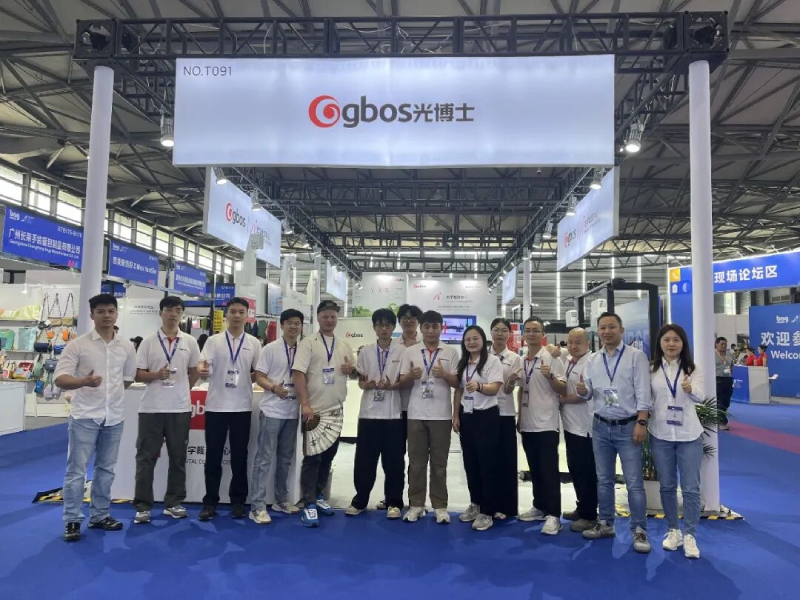
Looking ahead, GBOS will continue working closely with the bag manufacturing industry, helping enterprises achieve both immediate cost reduction and long-term sustainable development through intelligent, green, and digital manufacturing solutions.
By delivering practical technologies with visible, measurable results, GBOS is committed to supporting more manufacturers on their journey toward smarter, more efficient production.
 Address: No. 1 Liansheng Road, Hongmei Town, Dongguan City, Guangdong Province. CN
  Tel: +86 769 88990609
  Fax: +86 769 88990677
  Email: