


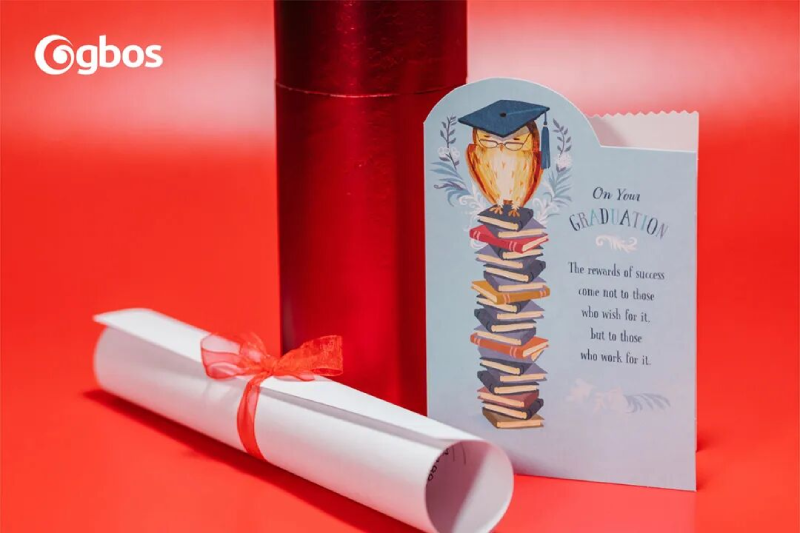
As graduation season approaches each year, demand for customized paper gifts continues to rise. From intricate university emblem greeting cards and appreciation cards for teachers to personalized paper-cut keepsakes for classmates, paper-based cultural and creative products have become meaningful ways for people to express their emotions.
At the same time, the market for premium customized greeting cards is expanding rapidly. Today’s consumers are no longer satisfied with conventional flat cards—they seek sophisticated craftsmanship, personalized designs, and higher-quality finishes that reflect genuine sentiment.
01 Challenges Facing Today’s Paper Goods Manufacturers
As customer expectations continue to evolve, greeting card production has become increasingly demanding.
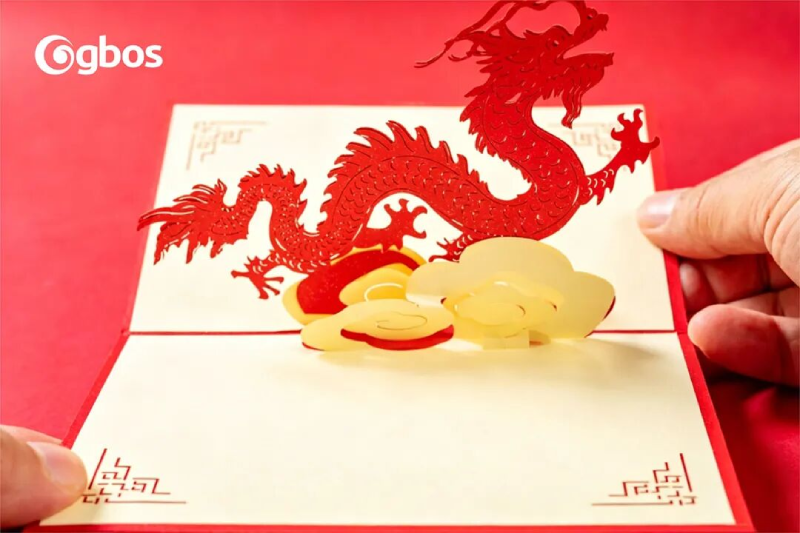
Modern buyers expect far more than simple die-cut cards. Intricate hollow patterns, multi-layer 3D structures, personalized portrait engraving, and unique customized designs have become premium value-added features. Meanwhile, stricter environmental regulations require manufacturers to deliver odor-free products with clean edges and no burn marks.
However, many paper goods manufacturers still struggle with traditional production methods.
Conventional die-cutting equipment offers limited flexibility for complex designs, while manual loading, unloading, and waste removal significantly reduce production efficiency. During seasonal demand peaks such as graduation season, labor shortages often become production bottlenecks.
Traditional laser systems can also leave yellowed or charred edges on paper products, increasing material waste and reducing product quality. Frequent changeovers between small-batch, multi-design orders further lengthen setup times, making it difficult to respond quickly to personalized customer demands.

To remain competitive, manufacturers need a smarter solution—one that combines automation, precision, flexibility, and environmentally friendly production into a single integrated system.
02 An Intelligent Solution for High-Value Greeting Card Production
Designed specifically for customized greeting card manufacturing, the XXP3-180/250-HK Fully Automatic Greeting Card Laser Cutting & Creasing System integrates automatic feeding, AI vision positioning, laser cutting and creasing, automatic waste removal, and finished-product stacking into one seamless workflow.
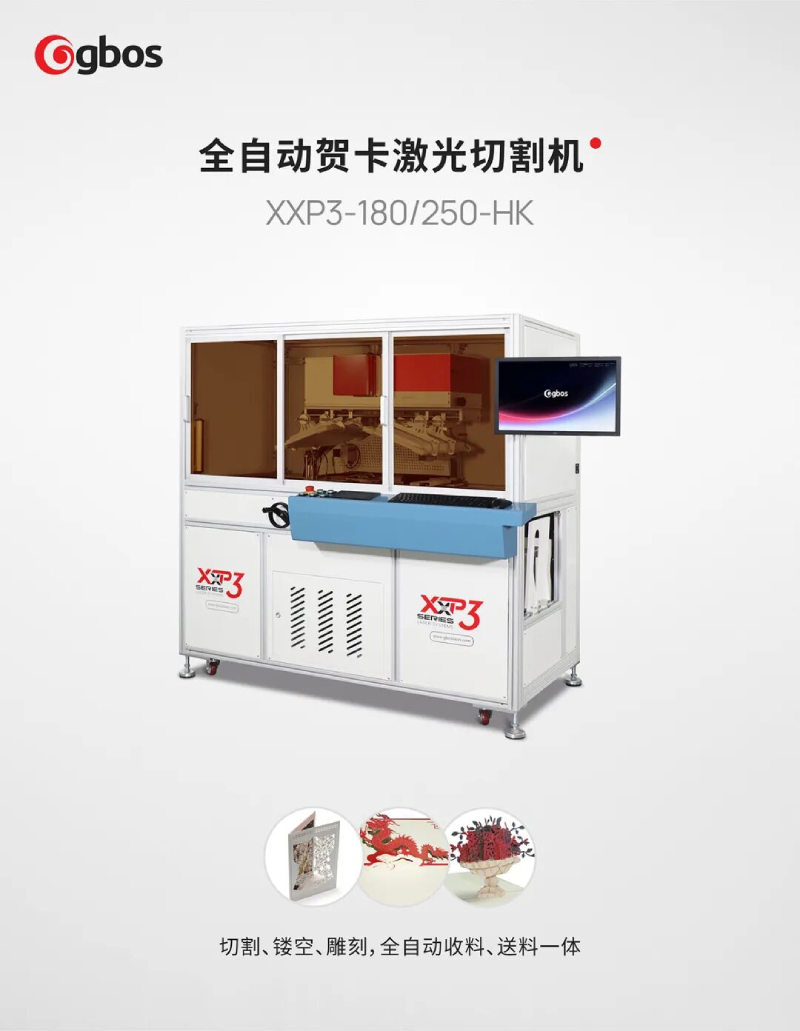
Whether producing large-volume orders during graduation season or rapidly switching to small customized batches, the system enables efficient, uninterrupted production with minimal manual intervention.
Its ink-free laser processing technology eliminates charring, yellowing, and rough edges while producing clean, refined paper artwork that complies with modern green manufacturing standards. The result is a premium finish that enhances both the appearance and perceived value of every greeting card.
Fully Automated Production for Maximum Efficiency
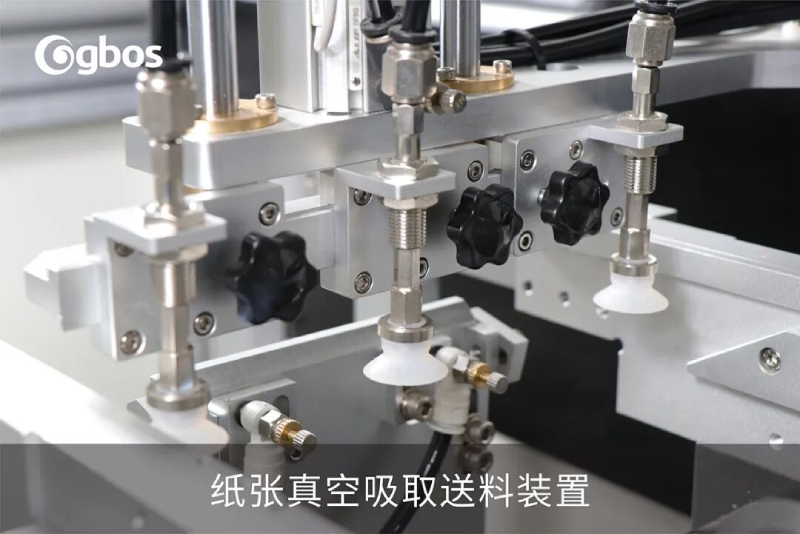
Vacuum-assisted feeding accurately separates individual sheets to prevent double feeding, while the automatic waste removal system continuously clears scraps without interrupting production. Finished products are stacked automatically, enabling stable 24/7 unattended operation that significantly reduces labor costs and improves on-time delivery during peak seasons.
AI Vision Delivers Precision Personalization
The HD AI vision system automatically recognizes variable graphics, including university logos, portraits, handwritten messages, and customized artwork, eliminating manual positioning.
Combined with a micron-level laser beam, the system produces delicate engraving, intricate paper-cut patterns, and multi-layer 3D structures with exceptional consistency, making personalized greeting cards easier and more economical to manufacture.
High-Speed, Stable Production with Lower Operating Costs
Available in both 180W and 250W configurations, the system is optimized for large-format paper processing.
High-speed servo motion allows CAD files to be sent directly to production without molds or plates, dramatically shortening sampling time for small orders. Meanwhile, GBOS’s proprietary constant optical path technology maintains long-term processing accuracy, while the modular machine design simplifies maintenance, minimizes downtime, and lowers overall operating costs.
One Platform for Year-Round Business Opportunities
Beyond graduation season, the system can efficiently produce wedding invitations, holiday greeting cards, paper-cut artwork, gift cards, packaging inserts, and other customized paper products.
Its versatility helps manufacturers maximize equipment utilization throughout the year, reduce seasonal idle capacity, and expand into new high-value market segments.
03 Accelerating the Intelligent Transformation of the Paper Goods Industry
The paper-based cultural and creative industry is rapidly evolving from labor-intensive production toward intelligent, flexible, and environmentally responsible manufacturing.
Today, manufacturers must compete not only on production capacity, but also on craftsmanship, customization capabilities, delivery speed, and sustainability. Flexible manufacturing, premium product quality, and green production have become essential competitive advantages.
Looking ahead, personalization, refined craftsmanship, and sustainable manufacturing will continue to shape the future of the industry.
GBOS remains committed to helping paper goods manufacturers embrace intelligent production through reliable, efficient, and eco-friendly processing solutions. By overcoming the challenges of production capacity, product quality, and environmental compliance, manufacturers can confidently deliver premium customized paper products at scale—bringing every meaningful greeting card to life with greater efficiency, consistency, and craftsmanship.
 Address: No. 1 Liansheng Road, Hongmei Town, Dongguan City, Guangdong Province. CN
 Tel: +86 769 88990609
 Fax: +86 769 88990677
 Email: