


As the FIFA World Cup 2026 in the USA, Canada, and Mexico draws closer, football fever is sweeping across the globe. More than just a sporting event, the World Cup has become a worldwide celebration that unites fans across cultures, generations, and borders.
On the pitch, players fight passionately for glory. Off the pitch, fans gather in homes, fan zones, and local fields to share the excitement together. Football is no longer simply a game—it is a symbol of passion, identity, and connection.

Among all the elements that define football culture, the team jersey stands out as one of the most iconic. It represents loyalty, pride, and the spirit of competition. For both players and supporters, a jersey is far more than sportswear—it is a badge of belief.
01 Rising Demand Brings New Challenges to Jersey Manufacturing
With the arrival of the World Cup, demand for football jerseys is rapidly increasing. From classic stripes and retro plaids to vibrant digital prints and customized club designs, today’s consumers expect jerseys that combine striking aesthetics with premium quality.

In jersey manufacturing, pattern alignment and print accuracy have become critical indicators of craftsmanship. Whether it is the continuity of shoulder stripes, the symmetry of side patterns, or the precision of digital print registration, every detail directly impacts the garment’s overall visual appeal and perceived quality.
However, traditional production methods often struggle to meet these increasingly demanding requirements:
* Multi-layer fabric cutting can easily cause pattern distortion and alignment deviation, affecting the final appearance;
* Manual positioning and alignment are time-consuming and prone to error, making it difficult to keep up with large-volume World Cup orders;
* The growing popularity of personalized and irregular-pattern jerseys creates additional challenges for precision cutting and flexible production.
As market expectations continue to rise, manufacturers urgently need more intelligent, accurate, and efficient production solutions.
02 Precision Cutting Redefines Jersey Production
To address these challenges, the VC9-1820SSCCD Multi-functional Digital Cutting System delivers a smarter and more precise manufacturing solution for football jerseys.
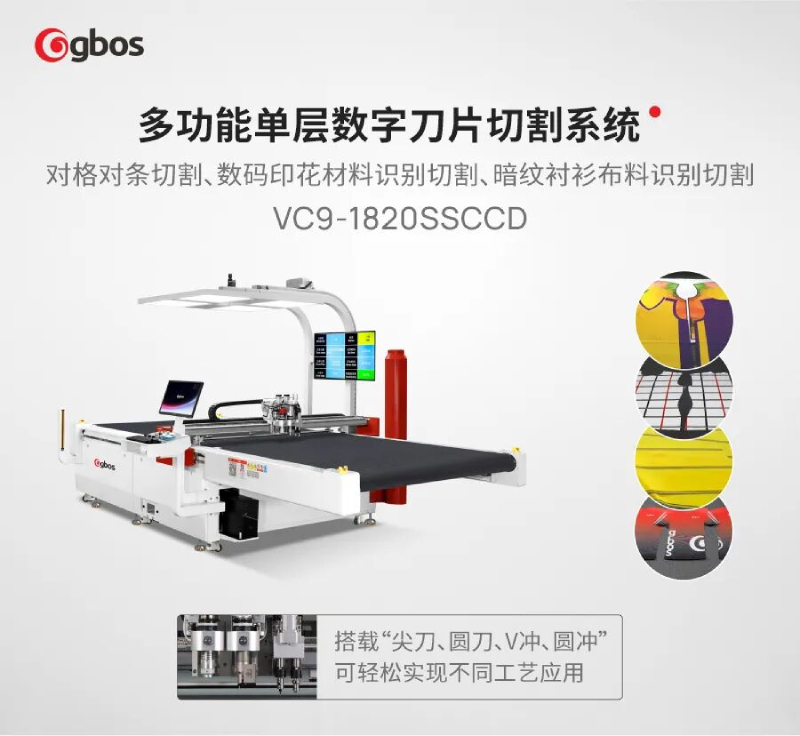
Equipped with an advanced AI VisionScan system, the machine accurately identifies fabric textures, printed patterns, and contour details, providing highly precise cutting guidance at the sub-millimeter level.
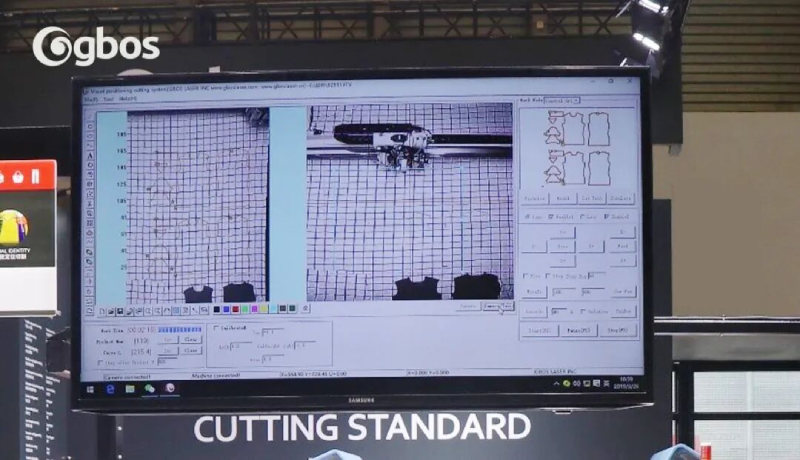
Its innovative single-layer cutting technology eliminates the alignment issues commonly caused by multi-layer stacking, effectively preventing pattern shifting and print distortion. The result is consistently clean cutting edges, seamless stripe continuity, and highly accurate digital print matching—meeting the strict quality standards required in premium jersey production.
The system also offers exceptional flexibility. Manufacturers can freely switch between oscillating knife cutting for high-efficiency production and rotary knife cutting for ultra-precise single-layer applications, adapting easily to different fabrics and processing needs.
In addition, optional tools such as marking pens, O-punches, and V-punches enable marking, punching, and positioning functions within a single integrated platform, streamlining the entire production workflow.
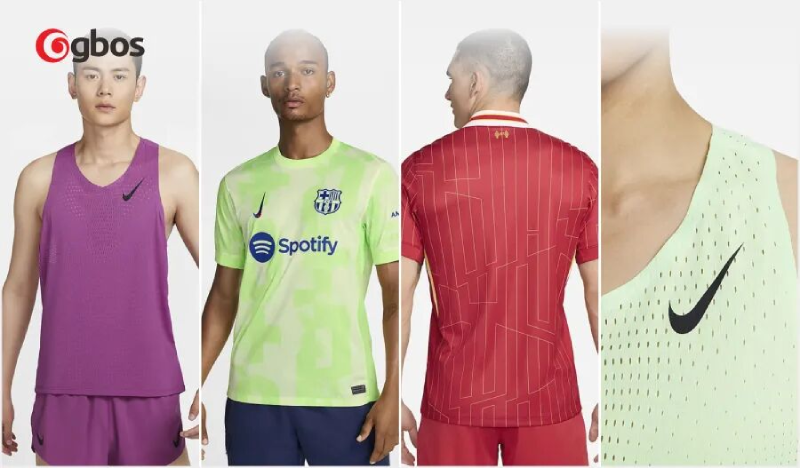
Whether handling large-scale production of best-selling World Cup jerseys or small-batch customized orders, the VC9-1820SSCCD provides the speed, precision, and versatility manufacturers need to respond confidently to surging market demand.
03 Intelligent Manufacturing Fuels the Passion for Football
Technology drives quality, and intelligent manufacturing is reshaping the future of sportswear production.
By combining advanced automation with precision craftsmanship, GBOS helps jersey manufacturers overcome efficiency bottlenecks while consistently delivering products that balance aesthetics, comfort, and durability.
Every precisely cut jersey carries not only superior manufacturing quality, but also the passion and excitement shared by football fans around the world.

Looking ahead, as intelligent manufacturing technologies continue to evolve, football apparel will become even more personalized, refined, and accessible. Through innovation, the spirit of the World Cup will continue to inspire global audiences—keeping the passion for football alive on every pitch, in every city, and in every heart.
 Address: No. 1 Liansheng Road, Hongmei Town, Dongguan City, Guangdong Province. CN
  Tel: +86 769 88990609
  Fax: +86 769 88990677
  Email: