


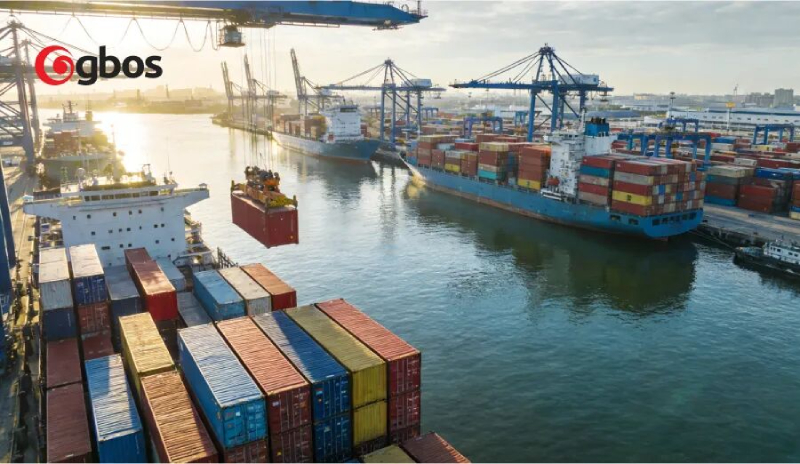
Amid the global wave of industrial relocation, Southeast Asia is emerging as a new engine of the global garment manufacturing industry. Countries such as Vietnam, Cambodia, and Indonesia, supported by demographic advantages, cost competitiveness, and favorable government policies, have attracted a large number of textile and apparel enterprises to establish operations locally. As a result, textile and garment exports across the region continue to grow year after year, making Southeast Asia an indispensable and critical link in the global supply chain.
01 The Dual Challenge of Precision and Efficiency in Woven Label Processing in Southeast Asia
Beneath the seemingly boundless opportunities of Southeast Asia’s blue-ocean market, hidden barriers persist within the accessory processing segment—particularly the challenges of woven label cutting, which continue to constrain the upgrading and scaling of manufacturing enterprises.
As the “identity label” of garments, woven labels are a direct reflection of brand recognition and product quality. With the rise of the global Gen Z consumer market, personalization and fashion-forward design have become mainstream trends. As a result, brand demand for woven labels is no longer limited to standard shapes; orders featuring irregular forms, complex patterns, and multi-color combinations continue to increase in proportion.

In reality, however, many local manufacturers still rely on manual or basic mechanical cutting methods. These traditional approaches not only limit design flexibility and struggle to handle complex patterns and irregular shapes with precision, but also suffer from low efficiency and inconsistent quality.
More importantly, environmental regulations across Southeast Asia are becoming increasingly stringent, while waste disposal costs continue to rise. The material waste and inefficient processes generated by traditional manufacturing methods are further compressing profit margins for enterprises.
For locally grown, scaling enterprises, insufficient processing precision makes it difficult to enter the mid-to-high-end market. For companies planning to expand overseas, how to meet localized production requirements while controlling costs and simultaneously complying with the supply chain standards of international brands has become a critical challenge.
The “precision anxiety” and “efficiency bottlenecks” in woven label cutting are becoming critical obstacles to the upgrading of Southeast Asia’s garment industry.
02 How to Accurately Address the Core Needs of the Southeast Asian Market
Pain points in any industry are the starting point for technological innovation. As Southeast Asia’s garment industry has been constrained by challenges in woven label processing, the introduction of the FB06CCD Dual-Station Intelligent Dual-Camera Laser Cutting Machine has precisely addressed the market’s core demands, using technology to redefine the fundamental logic of woven label cutting.
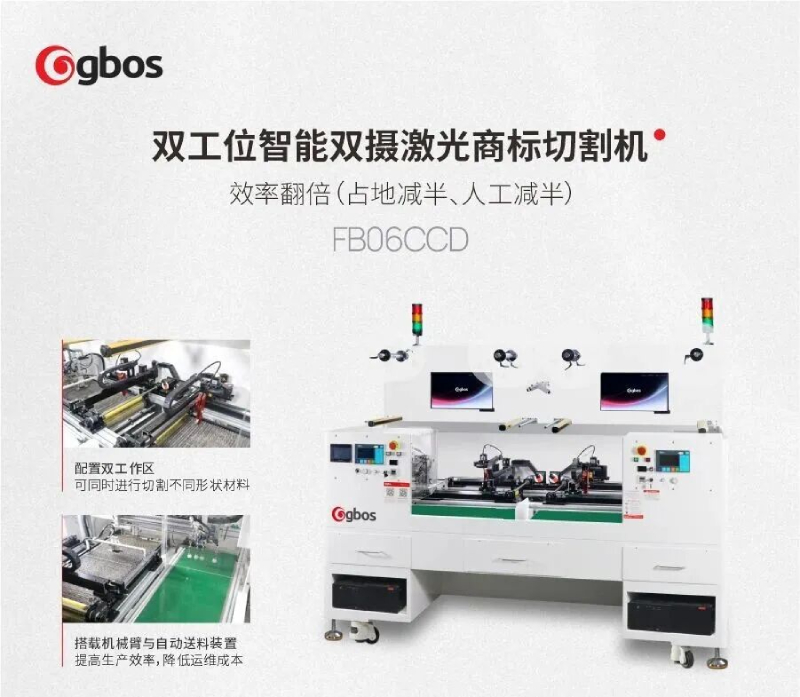
In terms of efficiency, the design of this machine is fully aligned with Southeast Asian enterprises’ core demand for cost reduction and productivity improvement. The combination of dual independent working stations and a dual-laser cutting system enables true parallel processing—two working areas can simultaneously handle woven labels of different sizes and patterns, with dual laser cutting heads operating in sync, completely breaking through the efficiency ceiling of traditional single-station, single-laser systems.
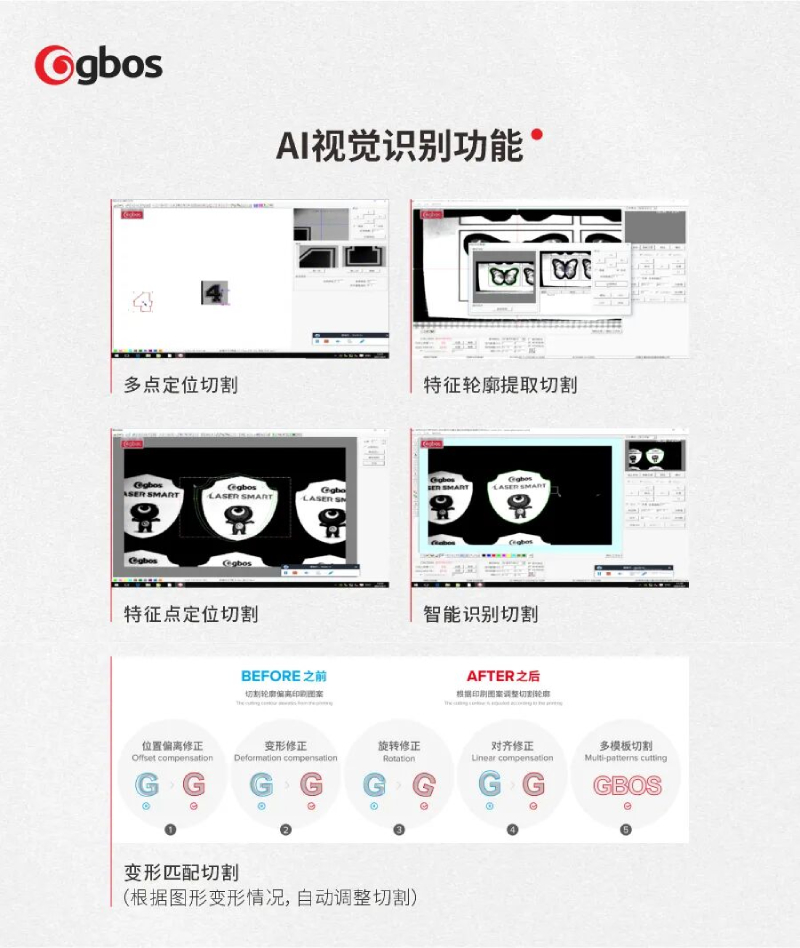
In terms of precision and flexibility, the AI-powered intelligent vision system serves as the core advantage. Equipped with two advanced intelligent vision cameras, the system accurately recognizes woven labels in various colors and complex patterns. Even when handling finely detailed brand logos or irregular designs, it achieves precise edge-following positioning and cutting, effectively resolving the “millimeter-level deviation” precision challenges of traditional processing methods.
ombined with an automatic feeding system and dual waste collection units, the machine significantly reduces downtime caused by material changeovers. While doubling production efficiency, it cuts labor costs and floor space requirements by half, making it an ideal fit for Southeast Asian enterprises pursuing lean manufacturing.
This level of flexibility enables manufacturers to respond rapidly to customized orders. Whether meeting the bespoke demands of niche brands or supporting standardized production for international labels, the system handles both with ease—helping enterprises unlock access to the mid-to-high-end market.
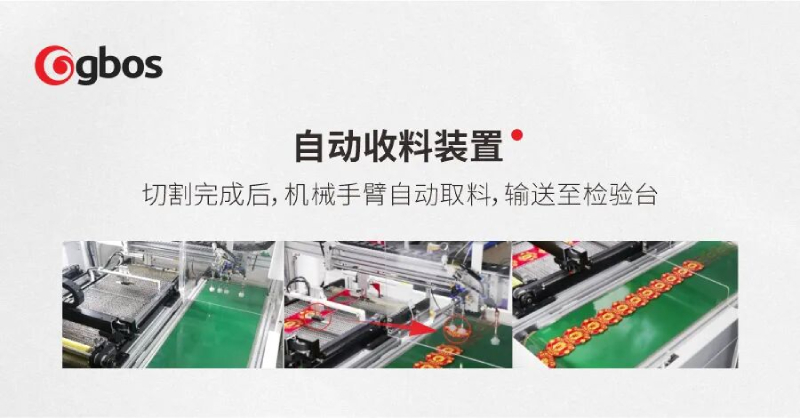
In terms of compliance and operational safety, the machine is equally aligned with development trends in the Southeast Asian market. The dual waste collection design effectively reduces material waste and lowers disposal costs, in line with increasingly stringent local environmental regulations. Meanwhile, the integrated automated unloading and inspection process minimizes errors caused by manual intervention, helping enterprises meet the supply chain audit standards of international brands and removing compliance barriers for companies expanding overseas.
03 A New Logic for Global Expansion: Technology Adaptability Determines Market Penetration
In the era of globalization, overseas expansion is no longer about simple product exports, but about the deep integration of technology, products, and localized market needs. For garment accessory equipment manufacturers planning to enter the Southeast Asian market, the ability to accurately identify local pain points and deliver solutions through adaptable technologies directly determines their market penetration.
At its core, the key demand of Southeast Asia’s garment industry lies in balancing quality and efficiency with operational flexibility. From textile industrial parks in Vietnam to garment manufacturing clusters in Indonesia, competition in the apparel sector is extending beyond fabrics and design to every detail of accessory processing.
Precision and efficiency in woven label cutting are becoming a new dimension of differentiated competition for manufacturers. Through technological innovation, GBOS is addressing the core challenges faced by local enterprises, helping partners enhance product competitiveness and, in turn, build deeply integrated, long-term industrial chain partnerships.

Looking ahead, the upgrading momentum of Southeast Asia’s garment industry will continue unabated, driving sustained demand for efficient, precise, and environmentally friendly processing equipment. Only by accurately understanding market needs and placing technological innovation at the core of growth can enterprises establish a solid foothold in overseas markets.
By leveraging technology to redefine woven label cutting processes, GBOS has delivered breakthrough solutions for the Southeast Asian market while equipping export-oriented enterprises with powerful tools for differentiated competition. Ultimately, this enables a win-win relationship between enterprises and markets amid the wave of globalization, jointly ushering in a new chapter in garment accessory processing.
 Address: No. 1 Liansheng Road, Hongmei Town, Dongguan City, Guangdong Province. CN
  Tel: +86 769 88990609
  Fax: +86 769 88990677
  Email: