


Laser Washing of The Denim: An Environment-friendly Customized Method for Real

December 31, 2015
Return To List

2015 autumn CHIC, GBOS Laser introduced Green Pioneer 2D intelligent denim  washing system. Just like the Green Pioneer 3D, they are the advanced devices used to substitute the traditional washing technological methods. There is more than 95% of similarity between them and the manual water washing. According to Mr. Liu Wu, the deputy general manager of GBOS Laser, the GBOS Laser devices are very popular in Bangladesh, Turkey, and Iran; however, the situation is not so optimistic in domestic market. He further maintained that there are two reasons behind the situation according to the market survey. On one hand, the cost to introduce laser washing devices are huge, and on the other hand, the environment protection awareness is not sufficient.
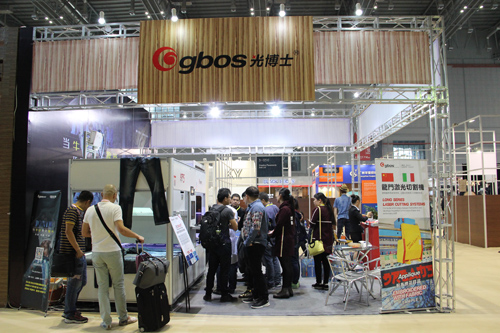
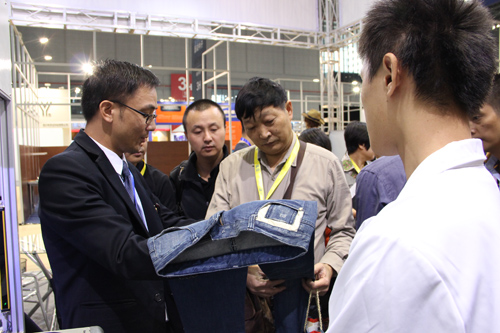
 

Through a few demonstrations in the exhibition, the journalists found that people in the industry shows an increasingly strong interest in the laser washing devices. In this exhibition, GBOS Laser attracts streams of visitors through its glossy brand that claimed to be “intelligent, fashionable, environmental-friendly and customized”.

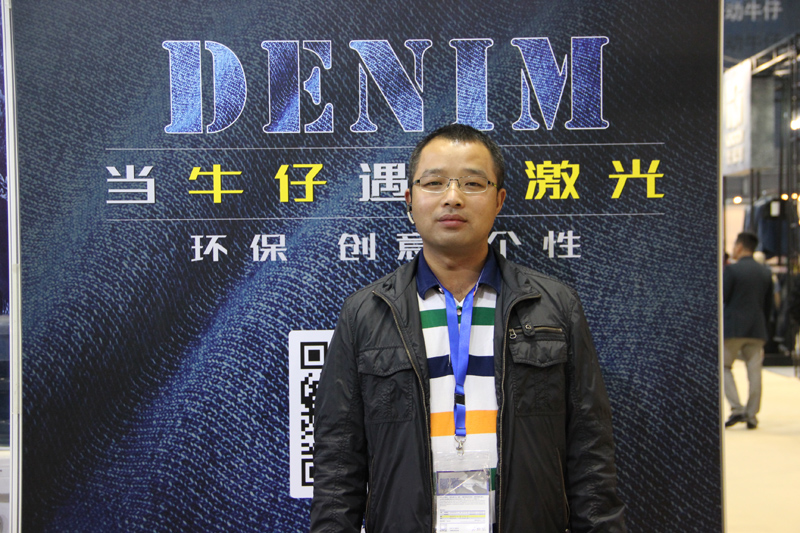
Mr. Liu said that currently the customized service is hot. They could create personalized marks, names, or design patterns and monkey washings according to different requirements of the customers.

Talking about the prospective of the laser devices, Mr. Liu is quite optimistic. He said adopting environment-friendly technology is the prevalent trend. The advantages of the laser washing are obvious. It is imperative for the domestic denim  market to recognize it and implement it in their production. Our national policy and practice on environment protection is strengthened, so that the outdated denim  washing techniques would be eliminated. As our Chinese enhances the environment protection awareness, the promotion of laser washing will be easy. As to the development planning of the GBOS in the future, Mr. Liu believed that the positioning is essential, and that the GBOS Laser will actively expand the overseas market and integrate the global resources. 

We believe the laser washing that takes environment protection as the starting point, the quality as the base, the innovation as the highlights, and cost efficiency as the goal will have a bright future.

In the same time period, GBOS Laser held wonderful lectures themed the bright future of the laser washing of denim  in the denim  world forum, which has drawn quite a number of visitors in the industry.
Recommended news
  • Leather processing companies want to grow, but their growth is constrained by more than order volume. The real challenge lies in balancing factory space, equipment, and labor productivity. Many manufacturers find themselves caught in a dilemma: market opportunities are there, but their existing equipment and floor-space layout limit their production capacity. 01 Why Capacity Expansion Has Become Increasingly Difficult Factory rents continue to rise, making every square meter of usable floor space increasingly valuable. Meanwhile, orders are becoming more fragmented, and processing leather alongside various auxiliary materials has become increasingly common. Expanding capacity often means renting a larger factory and taking on higher fixed costs. Without expansion, however, existing equipment may reach its capacity limit and struggle to handle additional orders. Processing multiple material categories often requires multiple machines, each occupying valuable floor space and adding to operating costs. Space constraints eat into profits, while scattered equipment limits production capacity. This is a major challenge for manufacturers pursuing smart manufacturing. 02 How One Machine Can Deliver More Than Twice the Capacity The GBOS VC9-3080T Gantry-Type Multifunctional Digital Cutting Machine challenges the traditional approach of assigning one machine to one task. By integrating multiple cutting functions into a single system, it...
    Pub Date: Oct 21, 2026
  • Leather is a valuable natural material used in the footwear, leather goods, and home furnishing industries. Every piece has a unique texture, with defects that are often hidden and irregular in shape. As a key stage at the beginning of production, leather inspection directly affects material utilization and final product quality. 01 The Challenges of Traditional Leather Quality Inspection Traditional manual leather inspection relies heavily on the experience of skilled workers. Visual inspection is subject to human judgment, making it difficult to eliminate missed defects and misjudgments. In high-volume operations, workers must walk to the opposite side of the machine to retrieve each inspected piece of leather. This repeated movement wastes time and increases physical workload during continuous operation. Combined with the shortage of skilled operators and rising labor costs, maintaining consistent inspection standards while reducing processing time has become a key challenge for leather manufacturers seeking greater efficiency and higher quality. As the industry moves toward digital and smart manufacturing, there is a growing need for a stable, efficient leather inspection solution that accommodates actual workshop workflows. 02 Digital Leather Inspection for Smarter Leather Manufacturing The GBOS AI Intelligent Leather Inspection Machine AI-ITS1620 features a new exterior design that...
    Pub Date: Oct 19, 2026
Book a virtual demo to explore our digital cutting and process solutions.
Request an Online or On-Site Demo
Get Your Manufacturing & Process Solution
Contact Now
Customization
Customized products
Find the machine that suits you best
Select from the options below to find what you need faster.
Choose your application(s) from the list.
NEXT STEP
Do you process roll or sheet materials?
PRE STEP
NEXT STEP
What is the max length and width of your material?
Length
Width
PRE STEP
NEXT STEP
Here are the standard models for you:
PRE STEP