


Digital Cutting Solutions for the Concert Merchandise Industry: Keeping Pace with the “Walking Gdp”

September 12, 2025
Return To List

In recent years, the concert market has experienced explosive growth. From first-tier cities to second- and third-tier cities, concerts are being held one after another. Both the number of performances and the size of audiences are reaching record highs.

Concert

01 A Ticket Stub Powers the Economy

The concert economy goes far beyond ticket sales. It also fuels related industries such as merchandise, food and beverage, accommodation, and transportation. Together, these sectors form a complete industrial chain. This chain has become a powerful driver of consumption and economic growth.

Fans’ enthusiasm for concert merchandise is also rising quickly. T-shirts and sweat-absorbing cheering towels are popular choices. Promotional banners enhance the atmosphere. Customized bags printed with artist images or concert themes serve both practical and emotional purposes. These products have become important ways for fans to show their love.

concert related industries

With this momentum, the concert economy has become a promising new growth engine. Seizing this opportunity is vital for industries along the value chain.

02 Pain Points in Industry Development

As demand for concert merchandise surges, supply struggles to keep up. Popular items often sell out immediately. Many fans are left empty-handed, and businesses miss valuable sales opportunities.

At the same time, the quality of some products is inconsistent. Poor materials and rough craftsmanship are common problems. Outdated manufacturing methods make it hard to produce designs that match modern tastes. These issues not only harm the fan experience but also hold back the industry’s long-term growth.

03 Overcoming Production Challenges

The GBOS KC1625TT-GAT-2P offers an efficient solution to these problems.
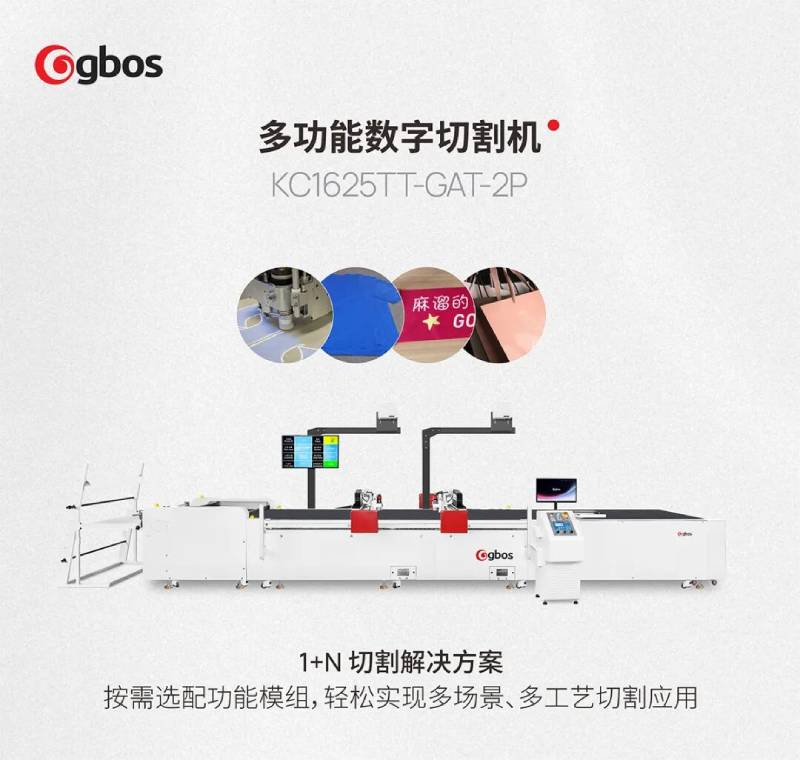
GBOS KC1625TT-GAT-2P

GBOS’s “1+N cutting solution” allows manufacturers to add or remove functional modules based on production needs. It can handle precise T-shirt cutting. It can also manage detailed bag processing. This flexibility supports efficient applications across multiple scenarios.

The machine’s standard automatic gripping and feeding system reduces manual labor. This greatly improves production efficiency. It also helps businesses ease the pressure of limited supply.
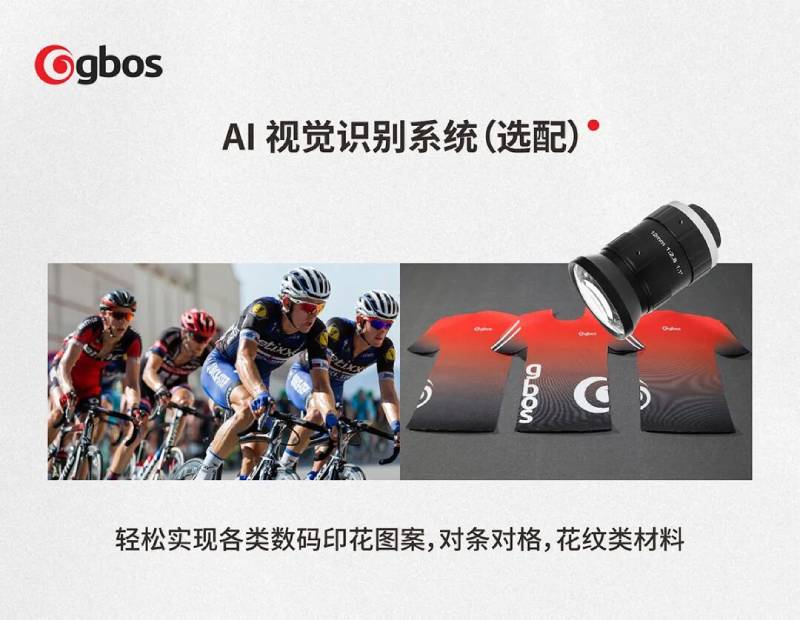
optional SCCD visual recognition system

The optional SCCD visual recognition system adds further precision. It quickly identifies product patterns and positioning marks. This ensures highly accurate cutting. The result is stable product quality, less wasted material, and lower production costs.

04 Technology Enriches the Concert Experience

The booming concert economy presents major opportunities. GBOS helps businesses tackle challenges of production capacity, quality, and cost. It enables them to fully benefit from the “walking GDP.”

concert

With ongoing innovation, GBOS is driving the concert merchandise industry toward higher efficiency, better quality, and sustainable growth. This not only supports industrial transformation but also contributes to the vitality of the broader economy.

Recommended news
  • As automotive interior design continues to evolve, dual-arc 3D curved surfaces have become a mainstream styling feature for headliners, typically combining suede-like soft upholstery with curved composite substrates. With rapid model iteration and increasing demand for customized orders, automakers require increasingly high levels of precision, acoustic transparency, and production efficiency for microphone hole cutting and irregular contour trimming on headliners. However, conventional universal processing equipment often lacks the adaptability required for these applications. Outdated processing methods make it difficult to meet the stringent requirements of 3D interior manufacturing, creating a critical bottleneck for quality improvement and productivity enhancement among many automotive interior suppliers. 1. Key Challenges in 3D Headliner Cutting The large 3D curvature and soft, multi-layer composite structure of automotive headliners present significant challenges for conventional cutting methods. Standard flat-bed cutting systems have clear limitations, as they cannot perform conformal cutting along complex curved surfaces. Traditional processing methods also rely heavily on dedicated tooling. High mold development costs and long lead times limit production flexibility, while even minor product changes or new-model launches may require new molds. In addition, repeated fixturing and repositioning can easily lead to misaligned microphone holes and dimensional deviations. These issues can affect headliner assembly...
    Pub Date: Sep 14, 2026
  • The lingerie industry is undergoing a major transformation. The market for sports bras and seamless bras continues to grow, while orders are becoming more fragmented and delivery cycles are getting shorter. Small-batch, multi-style production is gradually becoming the norm. At the same time, consumers are demanding greater comfort, better shaping performance, and more functional designs. This is pushing manufacturers to work with increasingly diverse and complex fabric combinations. For lingerie factories, production therefore needs to become more flexible than ever—while cost control, cutting accuracy, and quality consistency must remain stable. 01 Two Common Fabrics, One Critical Cutting Challenge Lycra® and cotton are among the most widely used materials in lingerie manufacturing, but both can present significant challenges during cutting. Lycra® is highly elastic. When multiple layers are stacked, the fabric can stretch and shift between layers. Even small dimensional deviations in the cut pieces can affect subsequent sewing and, in severe cases, result in an entire batch being rejected. Cotton presents a different challenge. Its soft texture can make cutting more difficult when the blade is not sharp or stable enough. Frayed edges, material adhesion, and inconsistent cutting results may then lead to additional manual rework. These challenges become even...
    Pub Date: Sep 10, 2026
Book a virtual demo to explore our digital cutting and process solutions.
Request an Online or On-Site Demo
Get Your Manufacturing & Process Solution
Contact Now
Customization
Customized products
Find the machine that suits you best
Select from the options below to find what you need faster.
Choose your application(s) from the list.
NEXT STEP
Do you process roll or sheet materials?
PRE STEP
NEXT STEP
What is the max length and width of your material?
Length
Width
PRE STEP
NEXT STEP
Here are the standard models for you:
PRE STEP