


Brand Value Separation: How Can Brands Rebuild Their Value Barriers?

September 03, 2025
Return To List

On social media, curious consumption scenes often appear:A lady flaunts her Hermès Birkin bag to showcase luxury, yet orders no-name tissues online; an outdoor enthusiast wears an Arc’teryx hardshell jacket, but charges their phone with a 9.9-yuan data cable.

At first glance, this seems contradictory—but it reflects a rising trend: brand value separation.

Brand Value

1. Why Is Brand Value Starting to Separate?

The core driver of this trend is the demystification and openness of supply chains.

In the past, consumers had little knowledge about which factory produced a certain pair of jeans or which supplier crafted the leather for luxury shoes. Today, however, supply chain transparency has transformed what used to be “exclusive formulas” into “public recipes” that are easily accessible.

Brand Value

This shift erodes the monopoly of tangible brand value. When products can be replicated quickly, consumers no longer pay premiums for material exclusivity alone.

But does this mean brands are destined to fail? Absolutely not.Instead, it eliminates the bubble and pushes brands back to the essence of value creation—building deeper, harder-to-replicate barriers.

2. How Can Brands Rebuild Value Barriers?

The most direct approach is to excel in tangible value, creating technological barriers that ensure:

What others don’t have, we provide.
What others have, we do better.

In this way, consumers are no longer just paying for a logo—they’re paying for genuine, irreplaceable performance advantages.

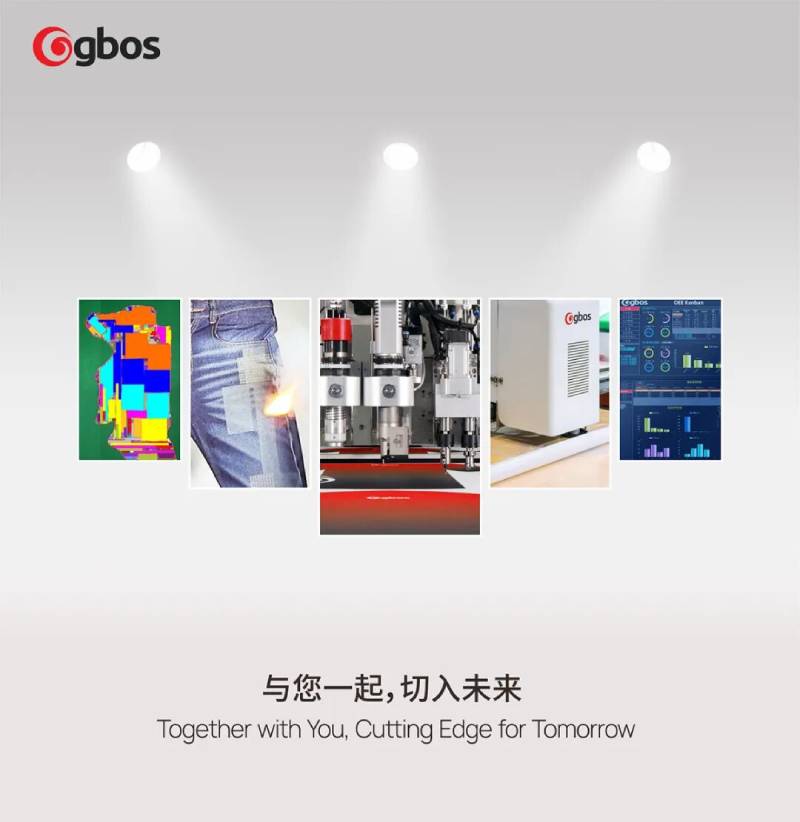
GBOS as an Example:GBOS has long been committed to innovative intelligent manufacturing, continuously pushing the boundaries of the industry and empowering brand partners with higher value.
GBOS

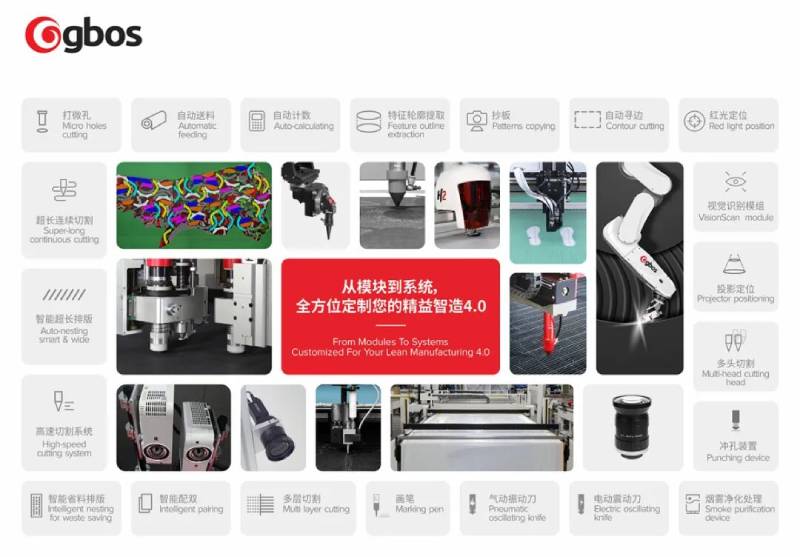
From the precise and efficient Digital Cutting System to pioneering Laser Equipment; from highly flexible Customized Automation Solutions to the trend-leading S-Denim 6.0 Denim Washing Solution; from the intelligent GBOS Deep Large Model to the latest IoT Bridge System—every breakthrough reflects the expertise of GBOS, representing the cutting edge of the industry.
GBOS

These technologies not only serve as GBOS’s “hard business card,” but also empower partner brands with a triple competitive advantage:

Cost reduction;
Efficiency improvement;
Quality enhancement.

While many competitors still struggle with low efficiency and poor yield, GBOS partners capture markets with superior processes and higher-quality products, forging a strong foundation for differentiated brand competitiveness.

3. Continuous Innovation: The Key to Long-Term Brand Value

Brand barriers are never static. They must be continuously reinforced through ongoing innovation.

In the past, a brand was a lofty symbol of identity. Today, its long-term value depends on its ability to “continuously create value.” This is precisely the principle GBOS upholds—anchored in research and development, user-centered, and always refreshing brand value.

Brand Value

In the wave of brand value separation, no brand can stand alone. GBOS, through technological innovation and full-chain empowerment, helps its partners withstand the impact of substitutes, define unique brand positions, and move toward a future built on efficiency, sustainability, and high value.

Recommended news
  • The footwear industry is undergoing a profound transformation. As consumer demand becomes increasingly personalized, manufacturers are faced with fragmented orders, shorter delivery cycles, and the need to process multiple materials simultaneously. Small-batch, high-mix production has become the new normal. However, many factories still rely on manual or semi-automatic marking processes that struggle to keep up with today’s manufacturing demands. Skilled marking operators are becoming harder to recruit, while labor costs continue to rise. Manual material positioning often leads to alignment errors, resulting in inconsistent marking quality and higher defect rates. Different production processes require different types of inks, forcing manufacturers to invest in multiple dedicated machines and separate production lines. At the same time, repetitive loading and unloading of cut parts consumes valuable labor hours, creating production bottlenecks during peak orders. To overcome these challenges, manufacturers need more than incremental improvements—they need an integrated, intelligent marking solution. 01. Smart Inkjet Marking System: One Platform for Every Footwear Application GBOS offers three specialized inkjet marking solutions that together support virtually every marking process used in footwear manufacturing. Whether producing standardized sports shoes or high-value specialty footwear, manufacturers can choose the configuration that best fits their production needs. IP-GH1280-AT-2SCCD Industrial Ink-Cartridge Marking...
    Pub Date: Jul 31, 2026
  • As graduation season approaches each year, demand for customized paper gifts continues to rise. From intricate university emblem greeting cards and appreciation cards for teachers to personalized paper-cut keepsakes for classmates, paper-based cultural and creative products have become meaningful ways for people to express their emotions. At the same time, the market for premium customized greeting cards is expanding rapidly. Today’s consumers are no longer satisfied with conventional flat cards—they seek sophisticated craftsmanship, personalized designs, and higher-quality finishes that reflect genuine sentiment. 01 Challenges Facing Today’s Paper Goods Manufacturers As customer expectations continue to evolve, greeting card production has become increasingly demanding. Modern buyers expect far more than simple die-cut cards. Intricate hollow patterns, multi-layer 3D structures, personalized portrait engraving, and unique customized designs have become premium value-added features. Meanwhile, stricter environmental regulations require manufacturers to deliver odor-free products with clean edges and no burn marks. However, many paper goods manufacturers still struggle with traditional production methods. Conventional die-cutting equipment offers limited flexibility for complex designs, while manual loading, unloading, and waste removal significantly reduce production efficiency. During seasonal demand peaks such as graduation season, labor shortages often become production bottlenecks. Traditional laser systems can also leave yellowed or charred...
    Pub Date: Jun 26, 2026
Book a virtual demo to explore our digital cutting and process solutions.
Request an Online or On-Site Demo
Get Your Manufacturing & Process Solution
Contact Now
Customization
Customized products
Find the machine that suits you best
Select from the options below to find what you need faster.
Choose your application(s) from the list.
NEXT STEP
Do you process roll or sheet materials?
PRE STEP
NEXT STEP
What is the max length and width of your material?
Length
Width
PRE STEP
NEXT STEP
Here are the standard models for you:
PRE STEP