


When the Gears of the Footwear Industry Turn: Who Will Cut Through to the Future?

May 27, 2025
Return To List

From the meticulously hand-stitched traditional cloth shoes to the mass-produced athletic footwear churned out by assembly lines, the footwear industry has undergone centuries of evolution and transformation. As the pace of industrialization quickens, cost control has emerged as the linchpin of corporate competition, fueling the prevalence of large-scale standardized production.

New directions under the changing needs of the times

In the early days, consumers’ demand for shoes was mainly focused on meeting daily wear, and footwear enterprises pursued production volume to satisfy the huge market demand.

Today, consumer demands have become increasingly diversified and personalized. People are no longer satisfied with the basic functions of shoes alone, but have higher requirements for design and environmental protection. This series of demand changes has prompted the footwear industry to continuously explore new development directions.
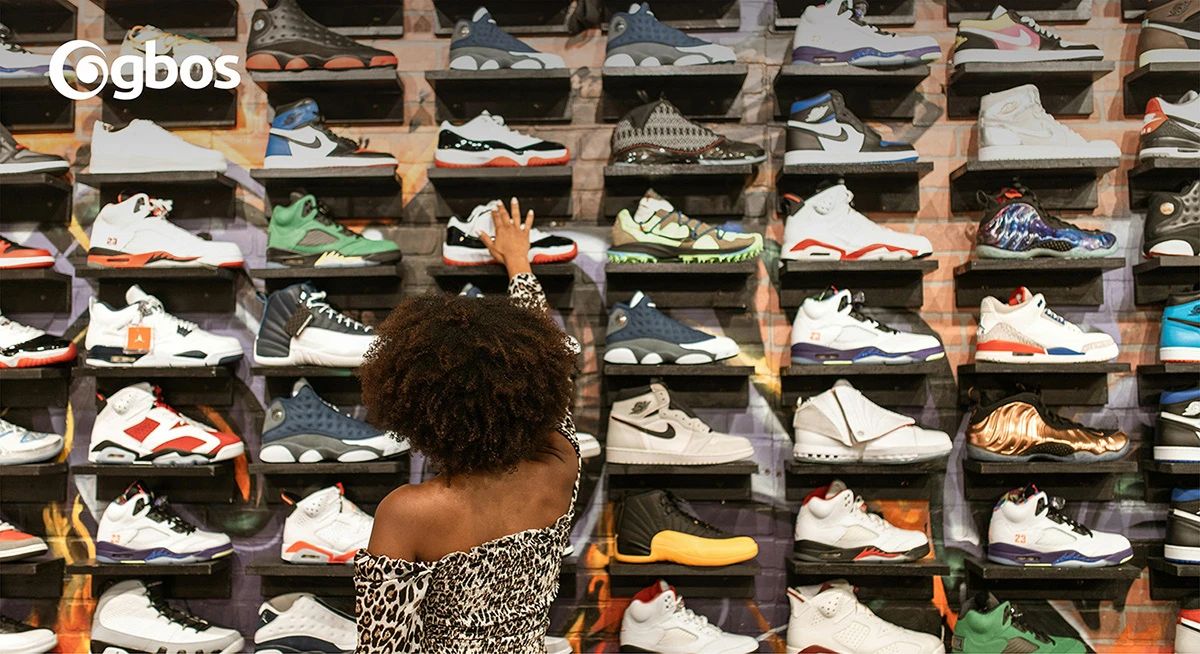

The Imminent Challenges Facing Manufacturers

In the transformation of footwear products from “output priority” to “cost control” and now to the era where “production capacity, cost, innovation, and environmental protection go hand in hand”, footwear enterprises are faced with numerous challenges.

Traditional production equipment and processes struggle to meet complex and diverse design requirements. When handling multi-layer foams and composite materials, low cutting precision and poor efficiency lead to severe material waste, thereby increasing production costs.

How to enhance production efficiency and reduce costs while ensuring product quality has become an urgent issue for footwear enterprises to solve.


The Rising Stars in the Thriving Footwear Industry

To meet these demands, the GBOS team has developed a range of star products for the footwear industry. Among them, the new multi-functional high-layer fine digital cutting bed H3-T serves as a cutting-edge solution specifically designed to address the challenges of processing multi-layer foams and composite materials in the production process.
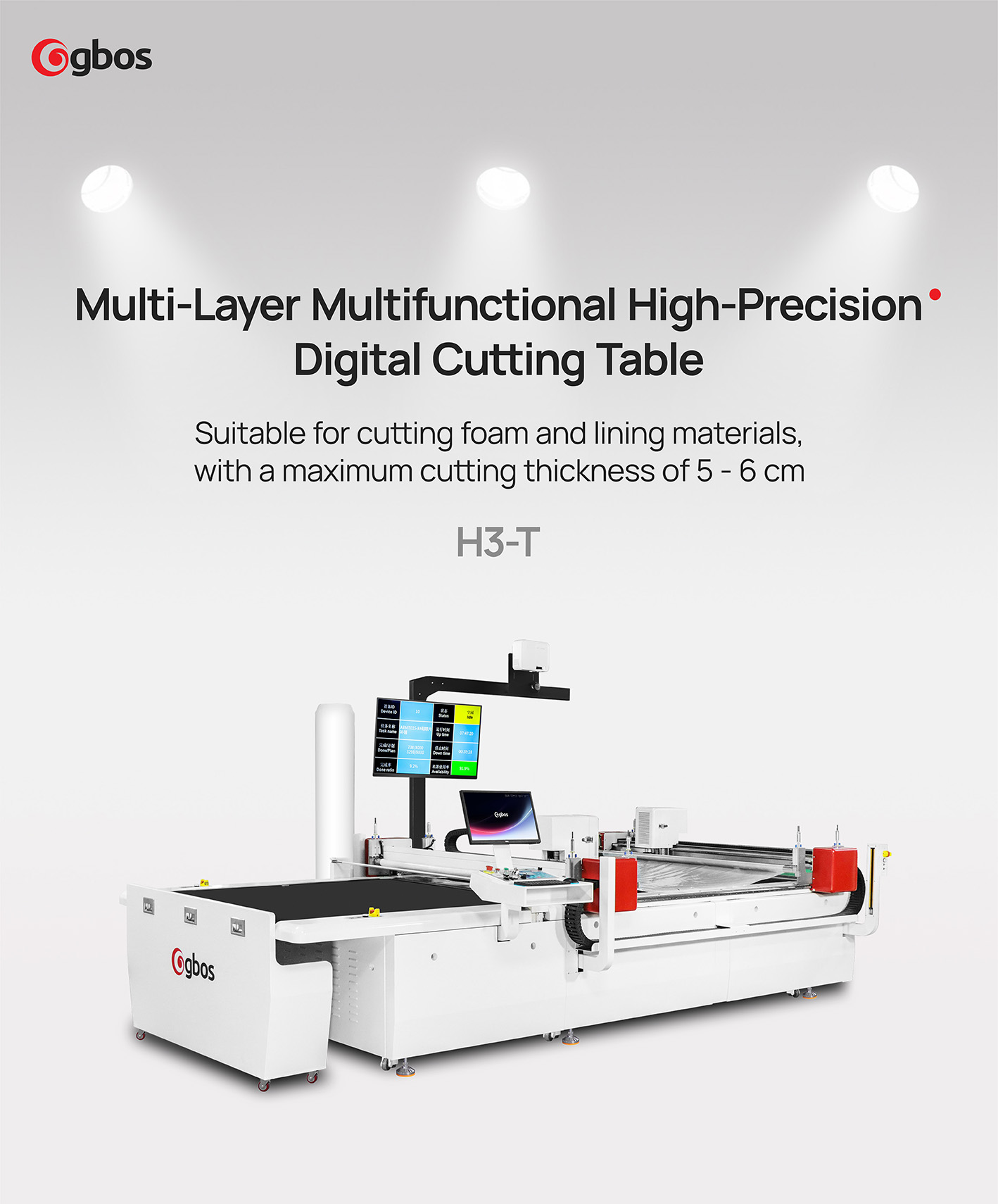
In terms of technological innovation, the H3 – T replaces traditional felt with “bristled bricks”. Coupled with a high – suction bed – passing device, it effectively solves the problem of unstable feeding of high – layer foam materials.
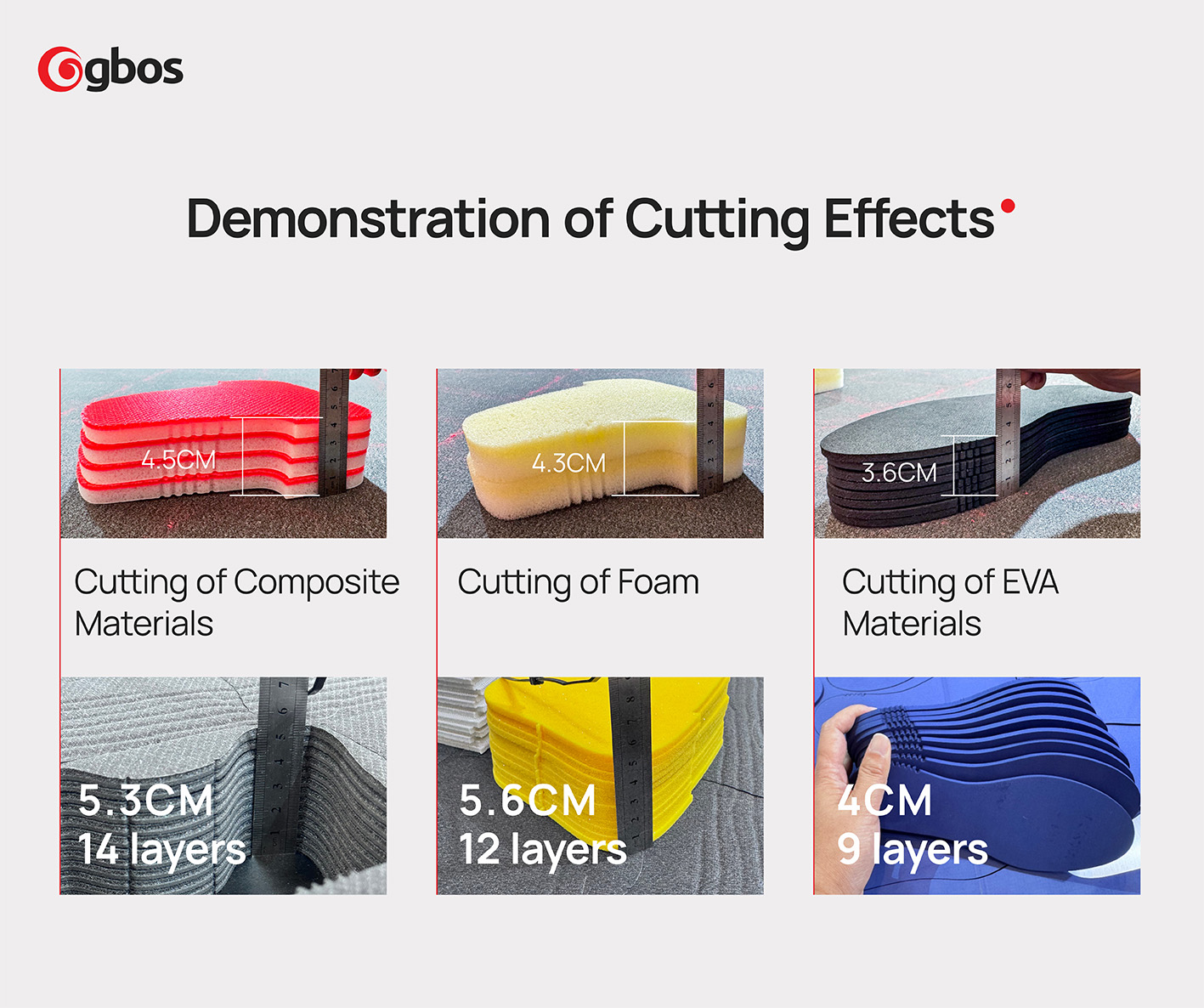
During the cutting process, the automatic feeding is smooth and stable, ensuring that every cut is accurate. Its cutting height can reach 5 – 6 CM (subject to the material). It can easily handle both multi – layer foams and composite materials.

Meanwhile, its production capacity reaches 7,000 – 15,000 pieces per hour, significantly enhancing production efficiency and saving enterprises substantial time and labor costs.

The precise cutting technology of H3 – T not only reduces material waste, but also enables the perfect realization of complex designs. It meets enterprises’ need for the rapid delivery of large – volume orders, helping them gain a head start in the new development of the footwear industry.

Experience the Charm of Intelligent Manufacturing at Close Range

GBOS is committed to enabling footwear enterprises to stand out in the fierce market competition and promoting the footwear industry to develop towards intelligence,efficiency and greenness.
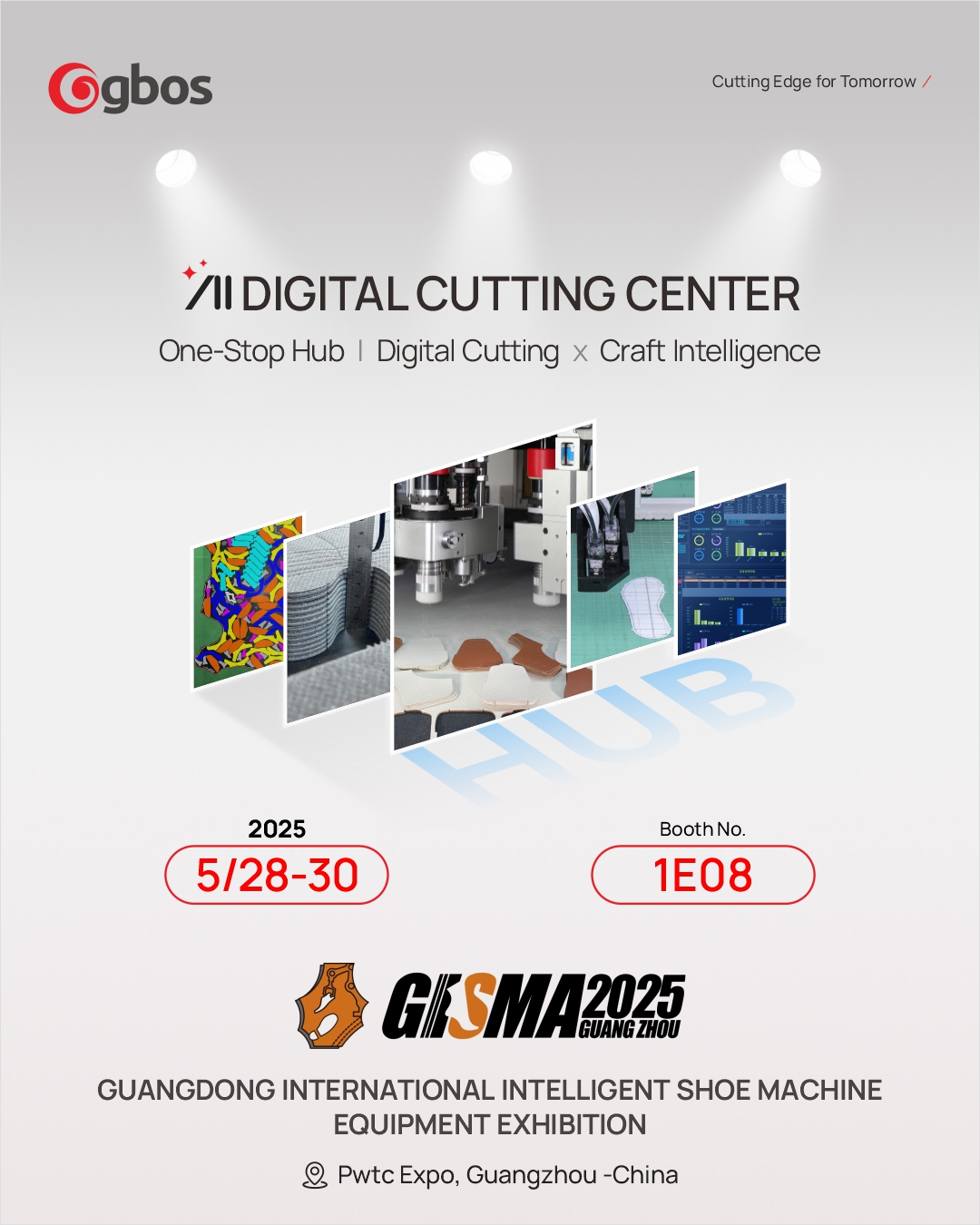
From May 28th to 30th, 2025, the H3-T will make another appearance at the Guangdong International Intelligent Shoe Machinery and Equipment Exhibition. During this exhibition, a brand-new product integrating “typesetting + coding + cutting” will also be released.

We sincerely invite you to visit the exhibition site, experience the cutting-edge technology up close, explore the new future of intelligent footwear manufacturing with GBOS, and unlock more development possibilities together.

Recommended news
  • The footwear industry is undergoing a profound transformation. As consumer demand becomes increasingly personalized, manufacturers are faced with fragmented orders, shorter delivery cycles, and the need to process multiple materials simultaneously. Small-batch, high-mix production has become the new normal. However, many factories still rely on manual or semi-automatic marking processes that struggle to keep up with today’s manufacturing demands. Skilled marking operators are becoming harder to recruit, while labor costs continue to rise. Manual material positioning often leads to alignment errors, resulting in inconsistent marking quality and higher defect rates. Different production processes require different types of inks, forcing manufacturers to invest in multiple dedicated machines and separate production lines. At the same time, repetitive loading and unloading of cut parts consumes valuable labor hours, creating production bottlenecks during peak orders. To overcome these challenges, manufacturers need more than incremental improvements—they need an integrated, intelligent marking solution. 01. Smart Inkjet Marking System: One Platform for Every Footwear Application GBOS offers three specialized inkjet marking solutions that together support virtually every marking process used in footwear manufacturing. Whether producing standardized sports shoes or high-value specialty footwear, manufacturers can choose the configuration that best fits their production needs. IP-GH1280-AT-2SCCD Industrial Ink-Cartridge Marking...
    Pub Date: Jul 31, 2026
  • As graduation season approaches each year, demand for customized paper gifts continues to rise. From intricate university emblem greeting cards and appreciation cards for teachers to personalized paper-cut keepsakes for classmates, paper-based cultural and creative products have become meaningful ways for people to express their emotions. At the same time, the market for premium customized greeting cards is expanding rapidly. Today’s consumers are no longer satisfied with conventional flat cards—they seek sophisticated craftsmanship, personalized designs, and higher-quality finishes that reflect genuine sentiment. 01 Challenges Facing Today’s Paper Goods Manufacturers As customer expectations continue to evolve, greeting card production has become increasingly demanding. Modern buyers expect far more than simple die-cut cards. Intricate hollow patterns, multi-layer 3D structures, personalized portrait engraving, and unique customized designs have become premium value-added features. Meanwhile, stricter environmental regulations require manufacturers to deliver odor-free products with clean edges and no burn marks. However, many paper goods manufacturers still struggle with traditional production methods. Conventional die-cutting equipment offers limited flexibility for complex designs, while manual loading, unloading, and waste removal significantly reduce production efficiency. During seasonal demand peaks such as graduation season, labor shortages often become production bottlenecks. Traditional laser systems can also leave yellowed or charred...
    Pub Date: Jun 26, 2026
Book a virtual demo to explore our digital cutting and process solutions.
Request an Online or On-Site Demo
Get Your Manufacturing & Process Solution
Contact Now
Customization
Customized products
Find the machine that suits you best
Select from the options below to find what you need faster.
Choose your application(s) from the list.
NEXT STEP
Do you process roll or sheet materials?
PRE STEP
NEXT STEP
What is the max length and width of your material?
Length
Width
PRE STEP
NEXT STEP
Here are the standard models for you:
PRE STEP