


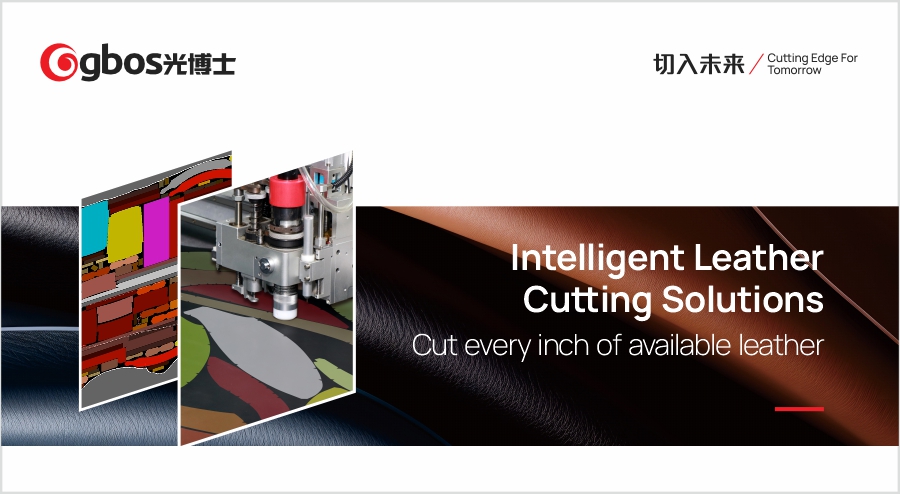
China’s luggage industry has been growing at a rapid pace in recent years, not only as a global manufacturing center, but also as a major exporter, producing nearly 1/3 of the world’s luggages. In these export categories, young people are increasingly focusing on choosing luggages with a sense of design, while focusing on the convenience of carrying small leather goods (card bags, wallets, coin purses, cell phone bags, etc.), the sense of design, materials, and production process of whether the corporate social responsibility and in line with the concept of sustainable development.
With this background, manufacturers are moving towards intelligent production methods for bags and luggage. Whether it’s optimizing processes, reducing material waste, practicing social responsibility, or introducing sustainable solutions, upgrading technical standards, and developing innovative products to meet the demand for a small number of diversified orders, this has become a common consideration for manufacturers. And brands will focus more on how to utilize technology for growth and innovation.
// Smart Manufacturing for Growth
In the midst of this trend, from nesting to cutting to bag craft innovation, GBOS provides you with a digital one-stop intelligent cutting + innovative craft solution to help you realize bag and luggage intelligent manufacturing 4.0.
// Cut Every Inch of Available Leather
Leather nesting, for leather manufacturers, it is particularly important. Because of the high cost of leather raw materials determine the manufacturer in the production process cannot be crudely made, but to ” meticulous “, which is quite strict requirements for leather nesting masters. In the face of various realities, enterprises must find more ” intelligent ” and ” outstanding ” automation solutions to enhance the competitiveness of enterprises.
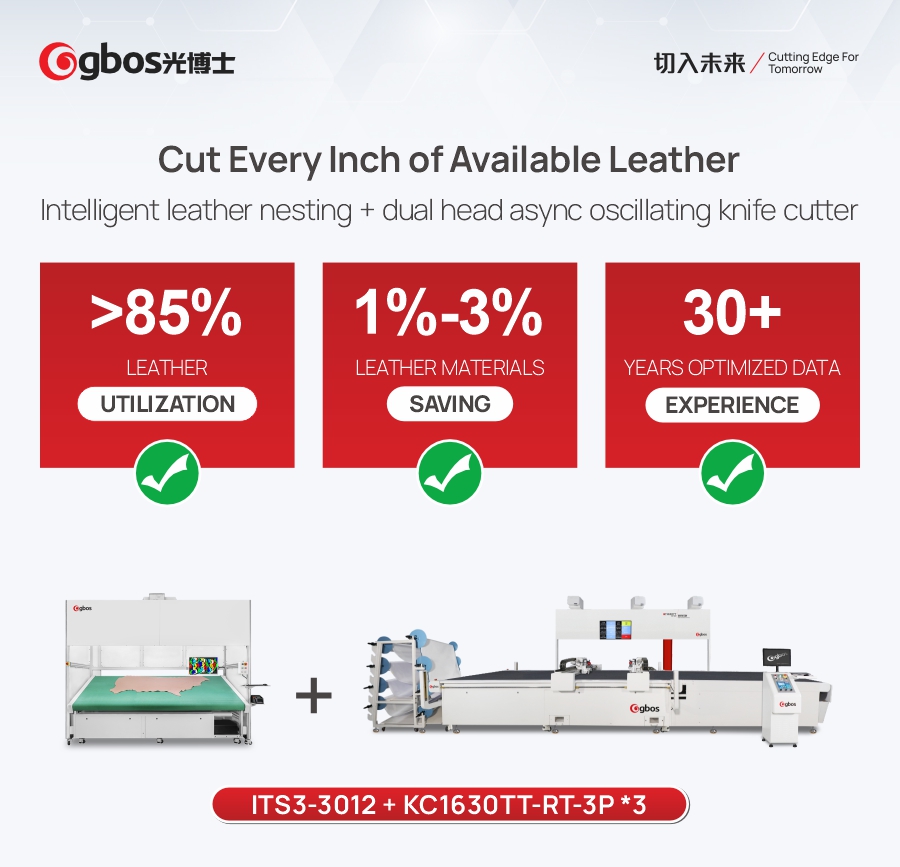
GBOS’s ITS3-3012 AI intelligent leather nesting, from its “birth”, has been given an “extraordinary” mission – cut every inch of available leather, through independent code and new architectural nesting, to nest the leather. Through independent code and new architecture nesting, nesting speed is increased by 50%, so that the utilization rate of leather is increased by about 2-10% compared with peer companies.
If you match the ITS3-3012 with a set of super servers, in terms of half leather cutting, you can build 3 KC1630TT-RT-3P to realize half leather non-stop nesting, cutting and receiving. In terms of full leather cutting, 2 KC3060TTX2 can be built to realize full leather non-stop nesting, cutting and receiving!
// Various Types of Synthetic Materials Cutting with High Speed
In addition to leather, GBOS Oscillating cutter can handle a wide range of synthetic materials (PVC, PU, TPU, etc.) and other flexible materials:
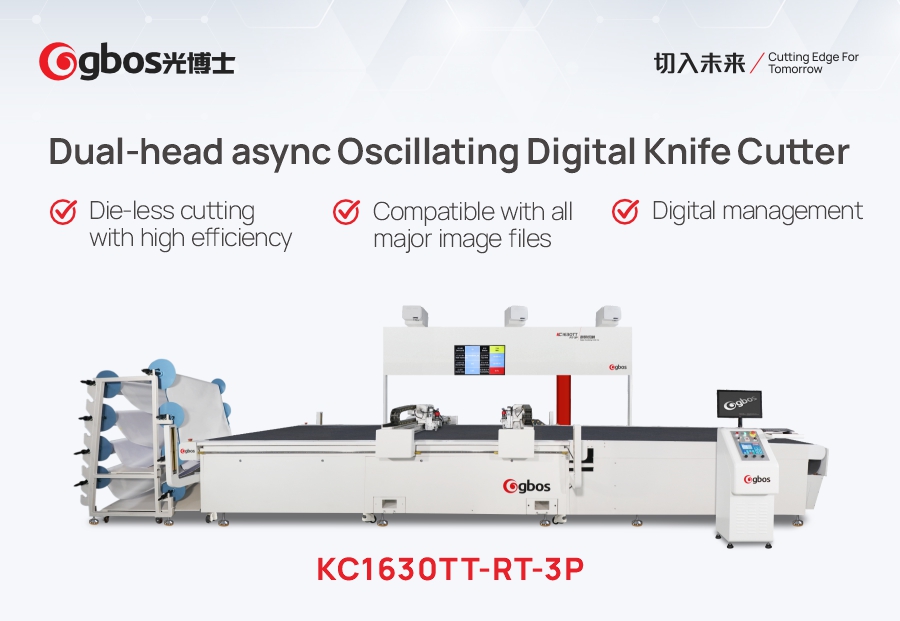
1. Dual head async die-less efficient cutting, shorten the order production cycle; Compatible with international mainstream image files, quickly respond to a variety of types of orders;
2. Highly controllable cut quality, in line with the brand’s quality requirements;
3. Equipped with OEE Dashboard to view production data in real time;
4. Access to IoT Bridge digital management platform, knowing of production progress and machine performance in real-time, providing data support for continuous optimization of production.
We believe that more and more luggage enterprises will introduce digital solutions to cope with sustainable development. And GBOS, as an equipment provider that has been deeply engaged in intelligent equipment for 18 years, will continue to provide you with customized solutions in line with the development of the times, and make a layout for you in advance!
 Address: No. 1 Liansheng Road, Hongmei Town, Dongguan City, Guangdong Province. CN
  Tel: +86 769 88990609
  Fax: +86 769 88990677
  Email: